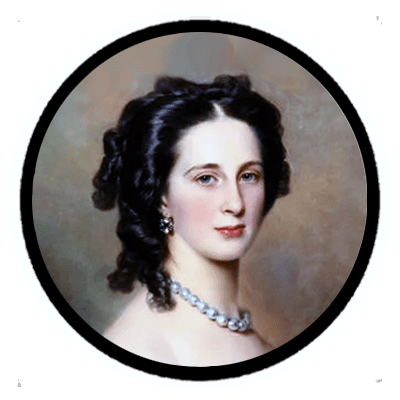
There is an elite group of women who significantly impacted and helped form the backbone of Norwich during the 1659-1959 time frame. IconicNorwich .org has designated these women as the “Grande Dames of Norwich.”
There is also a special group of men who were instrumental to the development of early Norwich. IconicNorwich.org has designated these men as the “Knights of Norwich.” In addition to the Knights of Norwich and the Grande Dames of Norwich, there are hundreds of others who have been designated by Iconic Norwich.org as “Norwich Notables.”
Choose A Grande Dame of Norwich
Sarah Kemble Knight (1666-1727)
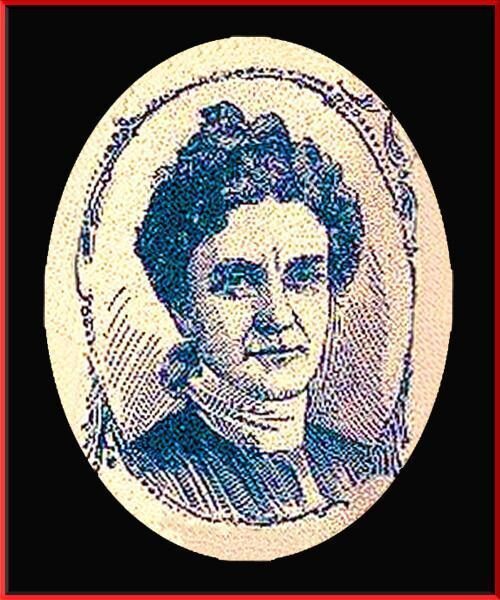
Sarah Kemble Knight was a prominent colonial businesswoman, educator, and diarist who left a lasting mark on Norwich. Born in Boston to Captain Thomas Kemble, a well-to-do merchant, and Elizabeth Trerice. Sarah married Richard Knight in 1689 and had one daughter, Elizabeth. After her husband’s death, Madam Knight demonstrated exceptional self-reliance and commercial acumen at a time when few women independently managed large-scale business enterprises.
Madam Knight first appeared in Norwich in 1698, arriving with goods to sell and listed in public records as a widow and shopkeeper. During this initial three- to four-year stay, she established herself as a “widow and shopkeeper”. She actively conducted business as an early female merchant in Norwich, engaging in retail trade and supplying goods to the townspeople.
Afterward, she returned to Boston temporarily, where she kept a shop and taught school. By 1704, while in Boston, people widely admired her literary accomplishments, refined taste, and independent character.
During this period, she undertook her famous, solitary horseback ride to New York and back, keeping the journal that preserved her observations of early New England life. Her writings provided sharp insights into colonial trade, noting how Connecticut merchants rated goods based on payment type—whether in grain, pork, beef, wampum, or hard money.
One of her first stops was in New Haven, where she helped settle the estate of a friend’s deceased husband. Along the way, she crossed rugged terrain alongside post riders and guides. Her journal vividly recorded the physical perils of colonial travel—such as crossing the Thames River ferry in high winds while horses “capper’d at a very surprizing Rate”—as well as local customs, court proceedings, and regional currency practices. First published in 1825 by Theodore Dwight, her journal remains one of the few surviving firsthand accounts of travel conditions in colonial Connecticut.
Her successful trip from Boston to New York speaks volumes about Knight’s energy, self-reliance, and courage. She returned to Boston in March, having kept a detailed journal of her travels and adventures, her food and lodgings, and the speech and customs of the people she met throughout the journey.
Sarah Knight’s journal was first printed in 1825 by Theodore Dwight. Later, in 1948, a portion of Madam Knight’s journal was reprinted by the Mattatuck Historical Society of Waterbury, Connecticut. Below is a reprint of the 1948 version.
The Journal of Sarah Knight
Between 1714 and 1717, Madam Knight returned to the Norwich area to be near her married daughter, Elizabeth Livingston. In this final chapter of her life, she became one of the town’s most prominent and wealthy figures. She ran a highly successful shopkeeping business, operated a tavern at 8 Elm Street (Elm Avenue) in Norwich, and accumulated extensive property, including several large estates and farms across Norwich and New London.
Sarah Knight joined Norwich’s First Congregational Church on August 12, 1717.
*Place cursor over image to magnify
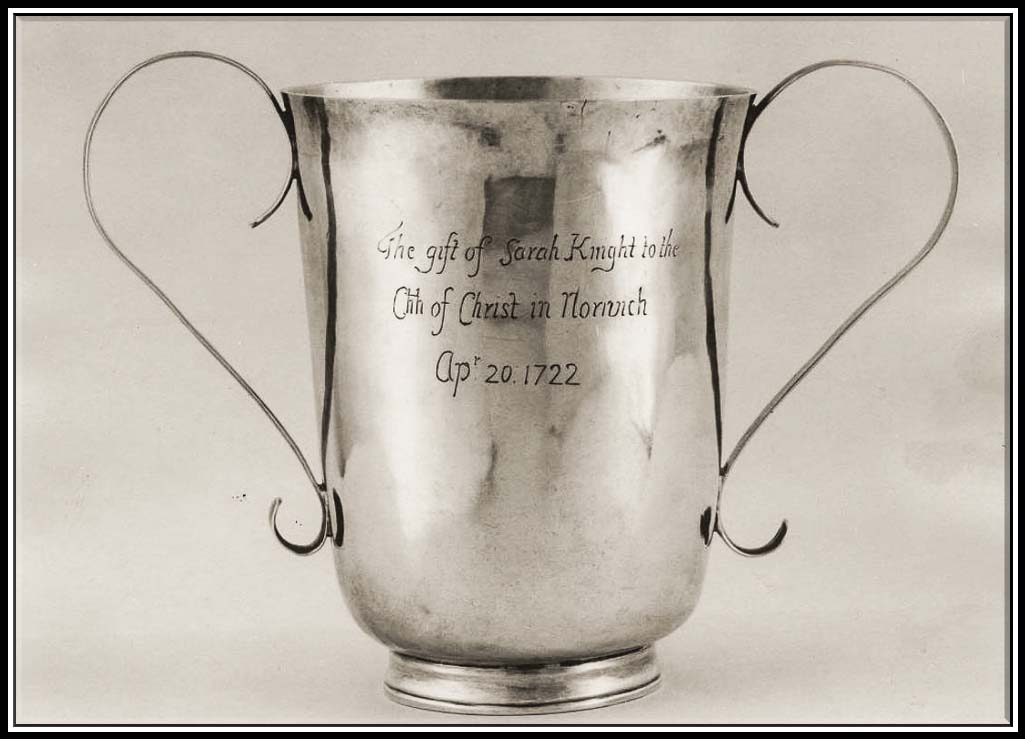
Sarah Knight Communion Cup
Upon joining the church, town records show that she was granted her liberty “to sitt in the pue where she use to sitt in ye meetinghouse.”
Sarah apparently valued her membership at the church, because in 1722 she donated a silver goblet to be used as the communion cup. …
The Sarah Knight Communion Cup remained in the church’s possession until the early 1900s, when the church sold it to George Palmer of New London for $1,000 to raise funds. It is now at the Museum of Fine Arts in Boston.
Sarah, daughter of Thomas and Elizabeth Kemble, gift from her in 1722 to the Church of Christ, Norwich, Connecticut (became First Congregational Church)
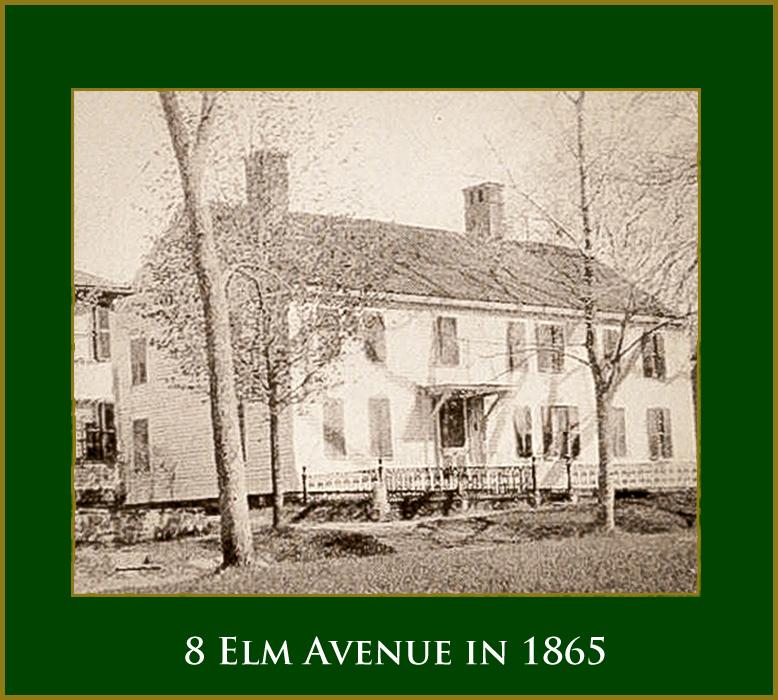
This 1865 photo shows Madam Knight’s former tavern at 8 Elm Avenue, on Norwichtown Green.
Under Connecticut Colony law in the late 1600s and early 1700s, taverns in the colony were not allowed to sell “wine, liquors, cider, or any other strong drink” to Indians. In 1718, she and others appeared before Richard Bushnell, Justice of the Peace, for selling strong drink to Indians. She accused her maid, Ann Clark, of selling the liquor but refused to take the oath to acquit herself. Sarah and her maid were both sentenced to pay a 20-shilling fine, about $300 in today’s dollars.
Sarah had one daughter who married Col. John Livingston of New London. When he died in England, they brought his personal effects to Sarah Knight’s house in Norwich on March 10, 1721. Shortly after that, Sarah and her daughter moved to New London to live on the Livingston farm in Montville. Sarah died there in 1727 and is buried in the Ye Ancientist Burial Ground in New London.
Sarah Knight lived a colorful life filled with success and adventure!
Acknowledgements
“Sarah Knight Owned a Norwichtown Tavern in 1700s,” (03/15/2020), by Dave Oat
Find A Grave.com
The complete list of sources may be found by clicking the “Bibliography” button, and, then typing “Sarah Knight” in the SEARCH box.
Lydia Huntley Sigourney (1791-1865)
Indian Names
by Lydia Huntley Sigourney
Ye say they all have passed away,
That noble race and brave,
That their light canoes have vanished
From off the crested wave;
That ’mid the forests where they roamed
There rings no hunter shout,
But their name is on your waters,
Ye may not wash it out.
’Tis where Ontario’s billow
Like Ocean’s surge is curled,
Where strong Niagara’s thunders wake
The echo of the world.
Where red Missouri bringeth
Rich tribute from the west,
And Rappahannock sweetly sleeps
On green Virginia’s breast.
Ye say their cone-like cabins,
That clustered o’er the vale,
Have fled away like withered leaves
Before the autumn gale,
But their memory liveth on your hills,
Their baptism on your shore,
Your everlasting rivers speak
Their dialect of yore.
Old Massachusetts wears it,
Within her lordly crown,
And broad Ohio bears it,
Amid his young renown;
Connecticut hath wreathed it
Where her quiet foliage waves,
And bold Kentucky breathed it hoarse
Through all her ancient caves.
Wachuset hides its lingering voice
Within his rocky heart,
And Alleghany graves its tone
Throughout his lofty chart;
Monadnock on his forehead hoar
Doth seal the sacred trust,
Your mountains build their monument,
Though ye destroy their dust.
Ye call these red-browned brethren
The insects of an hour,
Crushed like the noteless worm amid
The regions of their power;
Ye drive them from their father’s lands,
Ye break of faith the seal,
But can ye from the court of Heaven
Exclude their last appeal?
Ye see their unresisting tribes,
With toilsome step and slow,
On through the trackless desert pass
A caravan of woe;
Think ye the Eternal’s ear is deaf?
His sleepless vision dim?
Think ye the soul’s blood may not cry
From that far land to him?
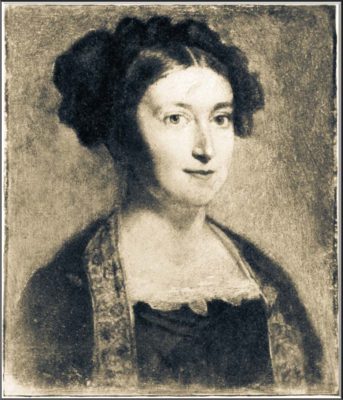
Lydia Huntley Sigourney, a Norwich native, was an American poet during the early and mid-19th century. She was commonly known as the ‘Sweet Singer of Hartford’.
She was educated in Norwich and Hartford. With her friend Nancy Maria Hyde, Sigourney opened a school for young ladies in Norwich in 1811. Frances Manwaring Caulkins entered the Norwich school in September 1811, and remained a very warm friend and frequent correspondent with Sigourney thereafter.
On June 16, 1819, she married Charles Sigourney, and after her marriage chose to write anonymously in her “leisure” time. It was not until her parents were in dire need and her husband had lost some of his former affluence that she began to write as an occupation. When she was referred to as the probable author of the anonymous “Letters to Young Ladies By a Lady” she admitted authorship and began to write openly as Mrs. Sigourney.
She was one of the most popular writers of her day, both in the United States and in England. Her writings were characterized by fluency, grace and quiet reflection on nature, responsibility, domestic and religious life, and philanthropic questions.
She described the view of Norwich from the east as: “like a citadel, guarded by parapets of rock, and embosomed in an amphitheater of hills whose summits mark the horizon with a waving line of forest green.”
Among her most successful poems are “Niagara” and “Indian Names”. The latter was set to music by Natalie Merchant for the 2010 album, “Leave Your Sleep”. She contributed more than two thousand articles to many periodicals and some 67 books. Her poem “Sailor’s Hymn At Parting”, from her book “Poems for the Sea” (1850) is repeatedly quoted in the 2019 film “The Lighthouse”.
You can hear Natalie Merchant sing ‘Indian Names’ by clicking on the link below.
Acknowledgements
“Old Houses of the Ancient Town of Norwich, 1600-1800,” (1895), pp 195-201
“Old Houses of the Ancient Town of Norwich, 1600-1800,” (1895), p 201, Painting by Frank S. Alexander
The complete list of sources may be found by clicking the “Bibliography” button, and, then typing “Lydia” in the SEARCH box.
Frances Manwaring Caulkins (1795-1869)
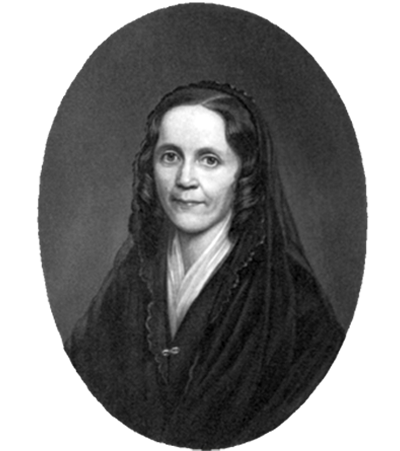
Frances Manwaring Caulkins was a well-known genealogist and author of the history of the towns of both Norwich and New London. Her book ”History of Norwich, Connecticut: From Its Possession From the Indians, to the Year 1866” still serves today as fundamental documentation for most of Norwich’s history prior to 1866. She was a direct descendant of one of the first proprietors of Norwich, Deacon Hugh Calkins.
During 1806, she became the pupil of Rev. Joshua Williams, who taught a select school for young ladies in Norwichtown. While attending this school, before she turned twelve years old, she patiently wrote out from memory a volume of educational lectures as they were delivered, from week to week.
Later, on January 4, 1820 she opened a select school for young ladies in Norwichtown. As her talent for teaching was developed, her scholars increased, and the school acquired an excellent reputation and was well sustained for 9 years.
The desk where Caulkins wrote most of her books is on display at the Leffingwell House Museum in Norwich.
In a time when history was a field dominated by men, Caulkins broke social barriers and served as an inspiration for other female authors. In 1849, she was the first woman elected to become a member of the oldest historical society in the United States, the Massachusetts Historical Society.
Acknowledgements
Wikipedia
Facebook : New London County Historical Society
American National Biography
The complete list of sources may be found by clicking the “Bibliography” button, and, then typing “Frances Manwaring” in the SEARCH box.
Harriet Peck Williams (1795-1880)
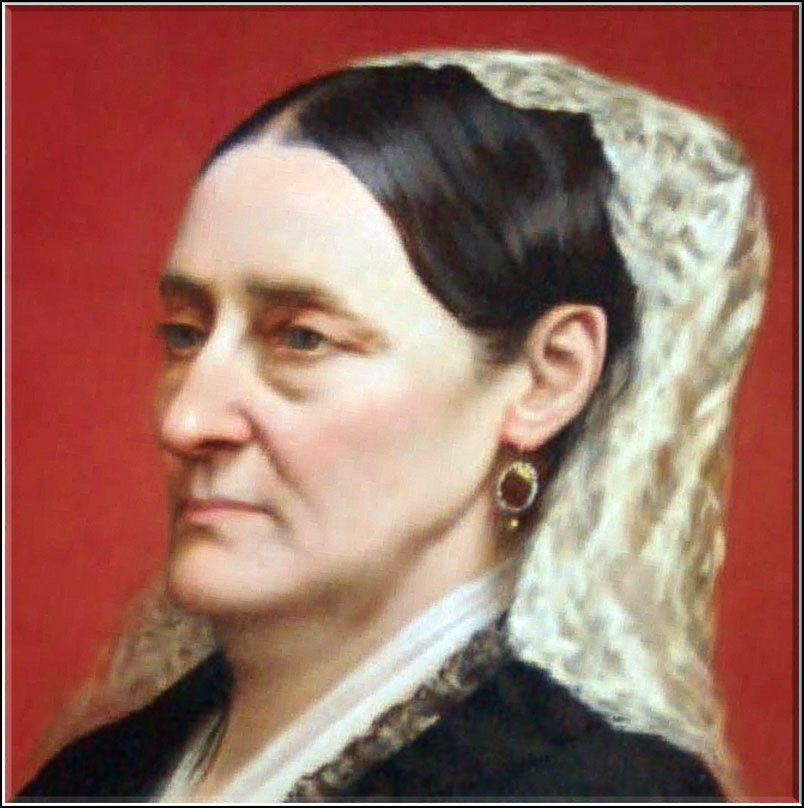
Harriet Peck Williams was one of Norwich’s most generous philanthropists in the late 1870s. She donated numerous gifts in support of cultural, religious and educational institutions.
In 1859, her gift Norwich Free Academy (NFA), of $5,000 ($166,000 in today’s dollars) established the Peck Library at the NFA, which was named in honor of her father, Captain Bela Peck, a wealthy Norwichtown businessman.
Park Congregational Church was built in 1874 on land donated by Mrs. Williams.
For many years she and her husband, William Williams, lived in the Teel House, a mansion located very near NFA and present-day Park Congregational Church. After the death of her husband, she became the last surviving member of this well-known Norwich family; all three of her children having predeceased her husband.
During her widowhood Mrs. Williams offered large contributions for the construction of Park Church. She donated the building lot for the church, the tower clock, a carillon of ten bells, and the west stained glass window in the sanctuary. These gifts were given by Harriet Williams in the declining years of her life.
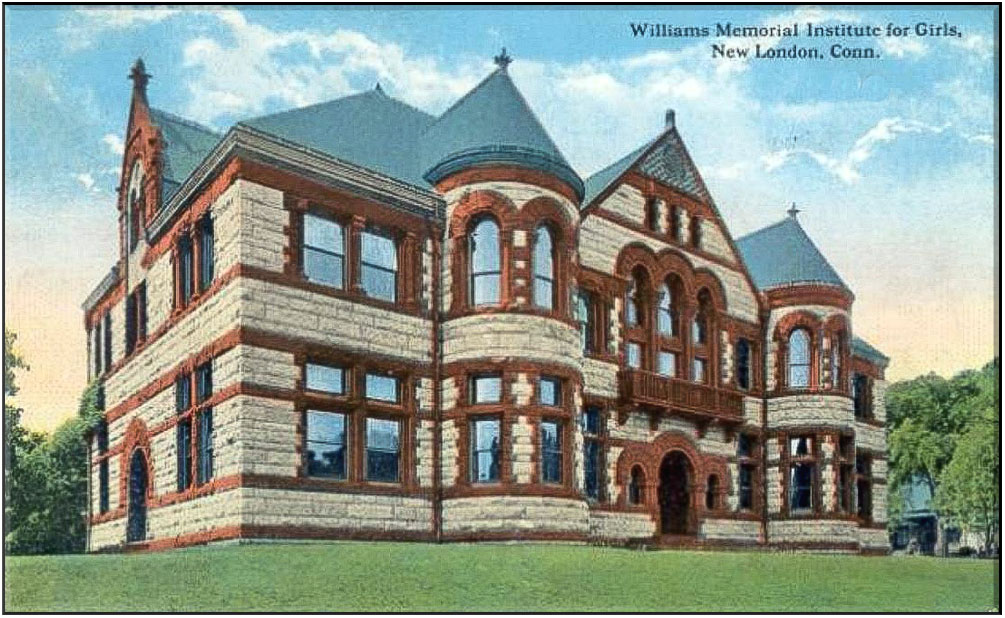
Harriet Peck William excelled in private offerings as well. In her last will she bequeathed a major portion of her fortune toward the foundation of a high school for girls in New London to be dedicated in memory of her oldest son, Thomas W. Williams, who at the time of his death lived there. Founded in 1891, this progressive high school was dedicated to the promotion and advancement of female education at a time when few saw such a goal to be a priority. Today the Williams Memorial Institution (The Williams School) is a private prep school for grades 6 – 12 located on Mohegan Ave in New London.

*Place cursor over image to magnify
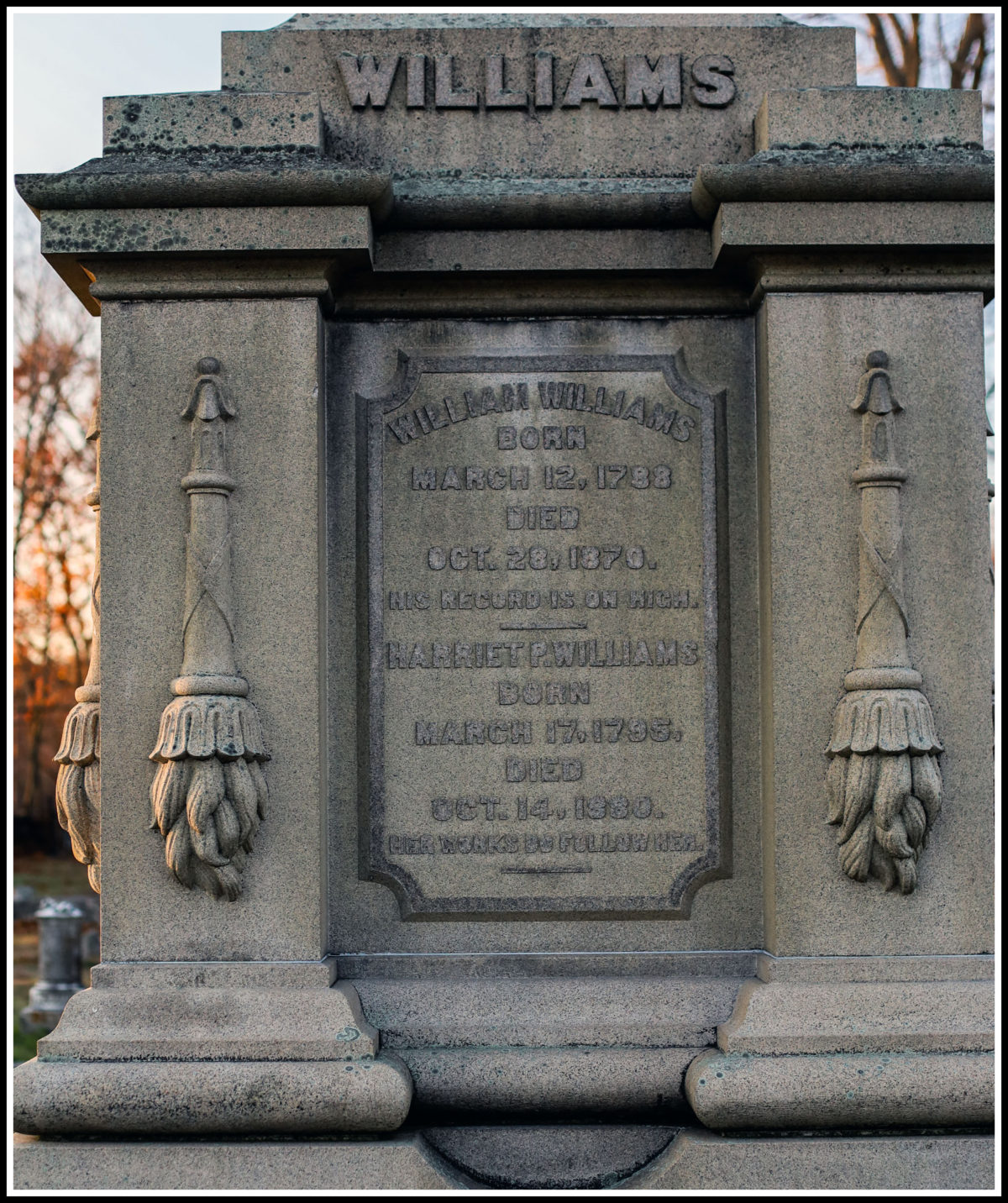
She died October 1880 at the age of 85. The Williams family memorial is located in the Yantic Cemetery in Norwich. She is buried alongside her husband William Williams.
A photo of the monument is shown on the left. When you place your cursor over the photo, you’ll be able to read the inscription, just below the date of her death. It reads :
“HER WORKS Do FOLLOW HER”
Acknowledgements
“Harriet Peck Williams,” Norwich Historical Society, Facebook post (03/27/2020)
“First Family,” by Peter Emanuel
Artist Unknown
Bob Dees
The complete list of sources may be found by clicking the “Bibliography” button, and, then typing “Harriet Peck” in the SEARCH box.
Eliza Wait Huntington (1798-1871)
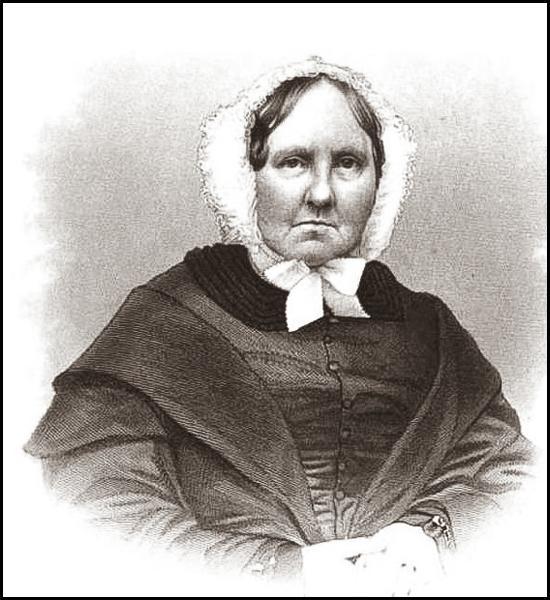
In June 1819, Eliza married Jedediah Huntington. At the time of their marriage, she was 21, and Jedediah was 27.
Jedediah Huntington, born September 13, 1791, was a descendant of Deacon Simon Huntington, one of Norwich’s founding fathers. Through much work and persistence, he became a wealthy and successful mercantile businessman in the Norwich community known for his “unbending integrity and large and frequent donations to religious and benevolent objects.” He was also a director of the Norwich Bank for almost 50 years, a trustee and director of the Society for Savings, and one of the projectors and managers of the Norwich Water Power Company. Jedediah Huntington also took an active part in building the railroad from Norwich to Worcester, and when the company was near failure, he helped save it by extending a personal line of credit to it.
Mr. and Mrs. Huntington lived together for more than fifty years. They celebrated their golden wedding in June 1869.
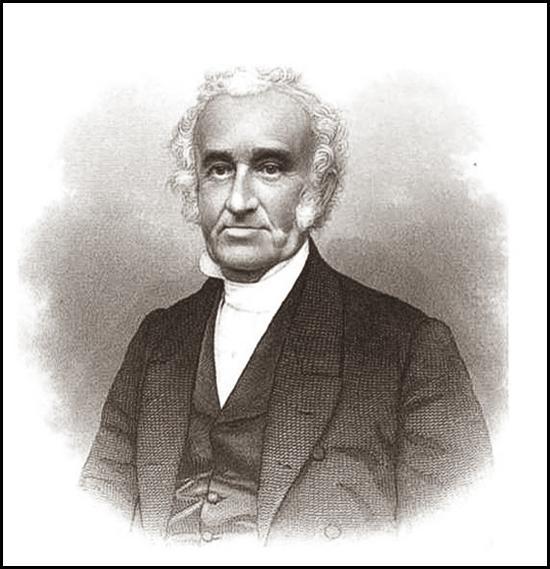
Eliza Wait Huntington, born May 4, 1798, was a lady with a warm heart and open hand. It is written that “the poor and the afflicted were ever drawn towards her by her deep and tender sympathy for them.”
Eliza’s early life was most certainly filled with heartache and disappointment. She was the youngest of her 6 siblings. Her sister Patty died when Eliza was 2 years old, her sister Hannah died when Eliza was 3, her brother Marvin died when she was 7, her mother died of a “fever” when Eliza was 8, her first step-mother died when Eliza was 12, and her father died when she was 19.
ELIZA HUNTINGTON MEMORIAL HOME: 99 Washington Street
The Eliza Huntington Memorial Home sits on land that was initially owned by Elijah Lathrop. Ownership changed hands several times, but finally, Jonathan Dodge bought the parcel and built his home with a Greek Revival Ornament above the front doorway in 1832.
In 1836 Jedediah Huntington purchased the property, the house, and the barn. He and Eliza lived in the home for thirty-five years.
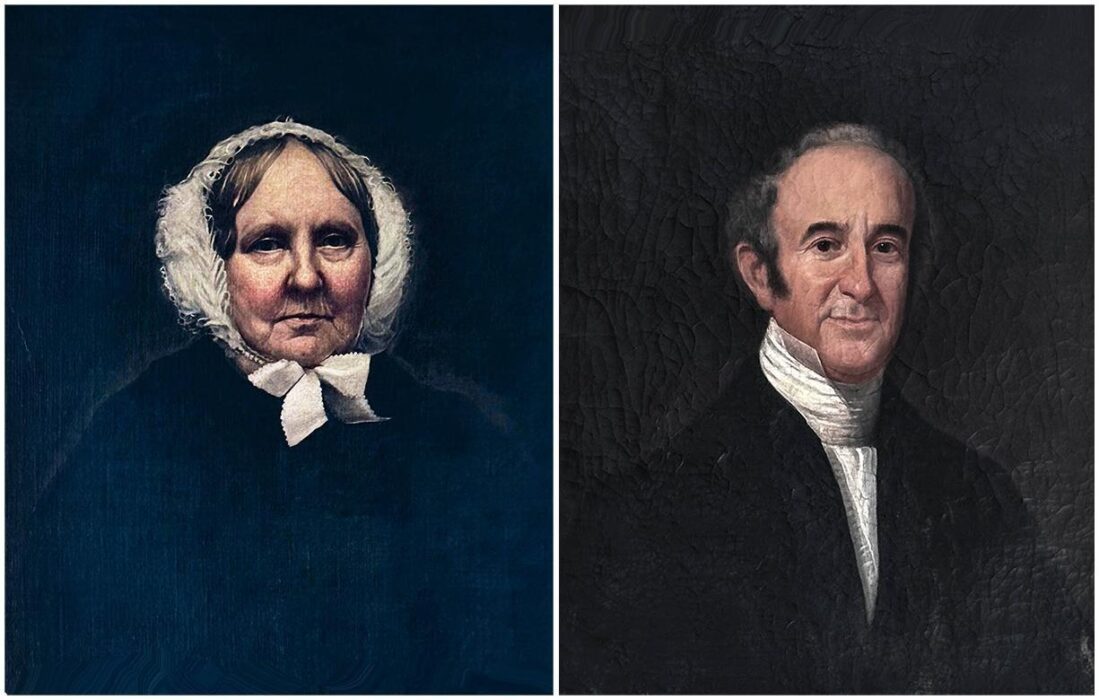
The portraits of Eliza and Jedediah displayed below hang in the front living room of the Huntington Home today.
*Place cursor over images to magnify
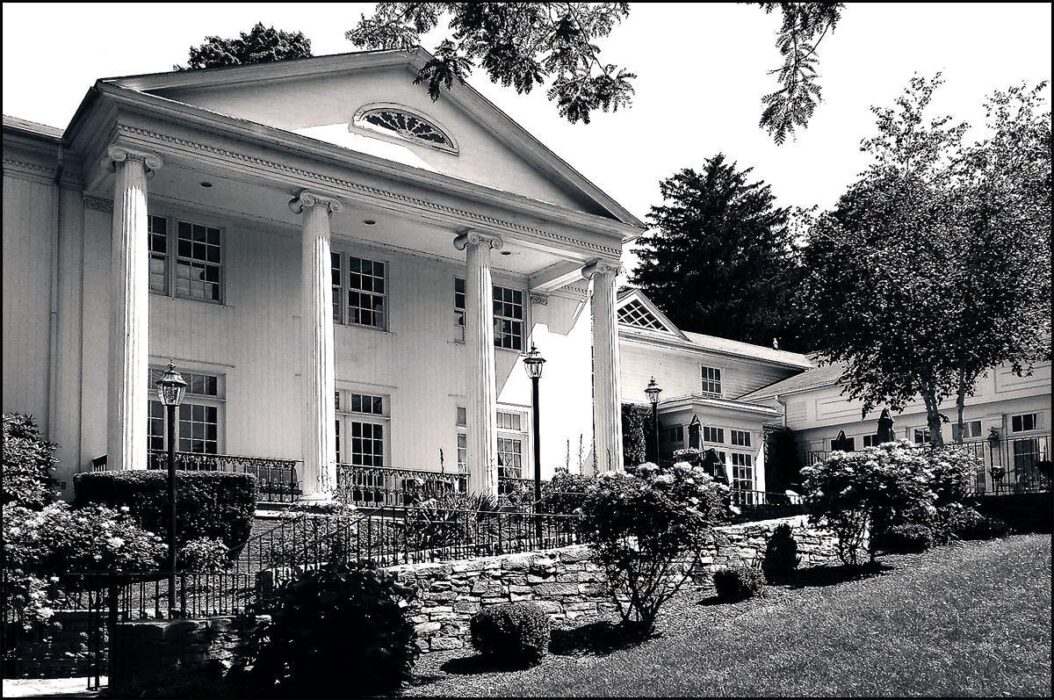
Eliza wanted to render a public benefit to Norwich and made her wishes known before she died in 1871. Accordingly, her husband bequeathed the property to memorialize her in his will. He donated their dwelling-house, estimated to be worth $25,000 ($625,000 in 2023 dollars) and an additional $35,000 ($875,000 in 2023 dollars).
In 1872 Jedediah founded the “Eliza Huntington Memorial Home,” and placed the management of the home in the hands of his executors, John T. Wait, James A. Hovey, and, the rectors of Christ and Trinity Churches, Samuel C. Morgan, Jeremiah Halsey, Lafayette S. Foster, Henry Bill, and Reverend Norris G. Lippitt.
Eliza and Jedediah’s gift has benefitted the women of Norwich for more than 150 years!
Today it is a retirement and assisted living facility for women over the age of 60.

*Place cursor over image to magnify
Eliza and Jedediah are buried in Norwich’s Yantic Cemetery.
Father: Judge Marvin Wait of New London (1746-1815)
Mother: Patty Jones Wait (1763- April 25, 1779)
First Step-Mother: Harriet Saltonstall Wait (1766-1808)
Second Step-Mother: Nancy Turner Wait (1772-1851)
Siblings: Marvin Jr., Patty, Harriet , Richard, Hannah, Oliver (Eliza was youngest child)
Husband: Jedediah Huntington (1791-1872)
It is unknown if Eliza and Jedediah had any children
Acknowledgements
New London Vital Records 1646-1854, p 439
Marvin Wait ~ Find A Grave
FamilySearch.org, Eliza Wait’s parents, siblings, and husband
The complete list of sources may be found by clicking the “Bibliography” button, and, then typing “Eliza Huntington” in the SEARCH box.
Sarah L. Huntington Smith (1802-1836)

Sarah Lanman Huntington, born in Norwich in 1802, led an extraordinary, exemplary, admirable life. She was a capable and creative young woman who, at the age of twenty-five, decided to become a missionary. Her first outreach was to the Mohegans in Uncasville, Connecticut. She started a Sabbath school there, raised funds, and eventually moved to the area to teach.
Later, she married Reverend Eli Smith, and they accepted a mission from the American Board of Commissioners for Foreign Missions (ABCFM). They sailed to Beirut (then part of Syria) and served as missionaries. Sarah established and taught in the first girls’ school in the area and Eli became the first person to translate the Bible from English to Arabic.
The stained glass windows shown below, displayed in Norwich’s Park Church, are a memorial to Sarah, her father, and mother. (Courtesy of Park Church)

Her deep family roots in Norwich helped prepare Sarah for a remarkable lifetime of achievements. She was the daughter of a Norwich attorney, Deacon Jabez Huntington (1767-1848), and was educated with missionary sympathies and feelings. All her relatives, on the side of father and mother, were active promoters of the work of God. Sarah was an active member of the Second Congregational Church in Norwich.
Being of a delicate constitution as a child, there was some difficulty in training and governing her. A protracted sickness when she was about six years old confined her to a cot by the fireside. During the first twelve years of her life, she was like other thoughtful and pleasant girls of her age, and spent her time in the amusements and pursuits of youth. At school she was industrious, studious, but not remarkably rapid in her progress.
It was at the age of fifteen that she went to a boarding school in Boston, where she remained a year. After returning to her father’s house, her life was spent surrounded by much company. She was also educated in Lydia Huntley’s Norwich Female Academy.
At the age of twenty-five, she initiated a mission to the Mohegans, helping to establish a school and the Mohegan Congregational Church.

*Place cursor over images to magnify
In 1894, Edward W. Hooker wrote: “She usually rode from Norwich on horseback, and, taking a little girl with her into the saddle, passed from house to house, using the child as guide, interpreter, and adviser. When she met in the road a few ragged natives, or a knot of men and women, die would stop her horse, and converse awhile with them, and slip a tract into the hand of each, and with a smile pass on.”
In 1834 Sarah Lanman Huntington married Reverend Eli Smith, and they travelled to Beirut. She immediately established the American School of Girls and became its first teacher. Sarah learned Arabic, French, and Italian. This allowed her to better understand cultural context and to help her husband’s Bible translation effort.
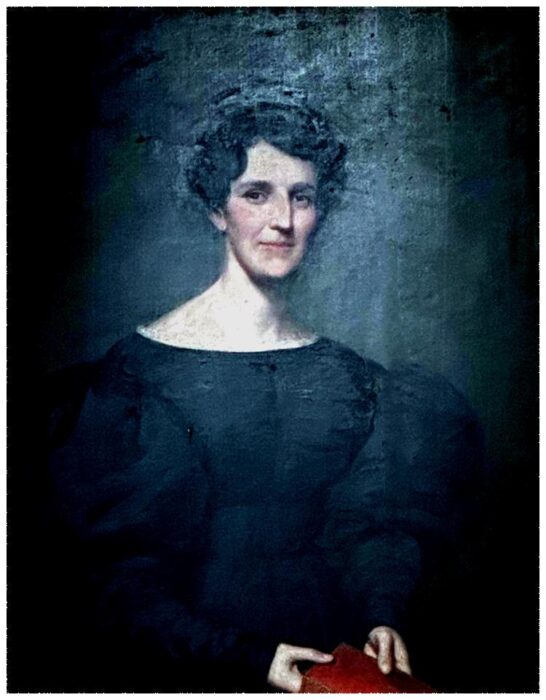
Portrait shown on left is on display at Norwich’s Park Church.
*Place cursor on image to magnify
American School for Girls in Beirut, Lebanon
Established 1835
Missionaries Sarah L. Smith and her husband Eli sailed to Syria in 1835. Noticing the prevalent illiteracy among girls in Beirut, Sarah decided to offer classes to the local population. With a handful of students, she started what soon became known as the American School for Girls.
As shown in the photo below, Sarah was its first teacher. Even though Sarah passed away less than a year after the school was founded, the educational institution continues to thrive today. The name for the original American School for Girls changed several times throughout history, and is known today as the Lebanese American University.
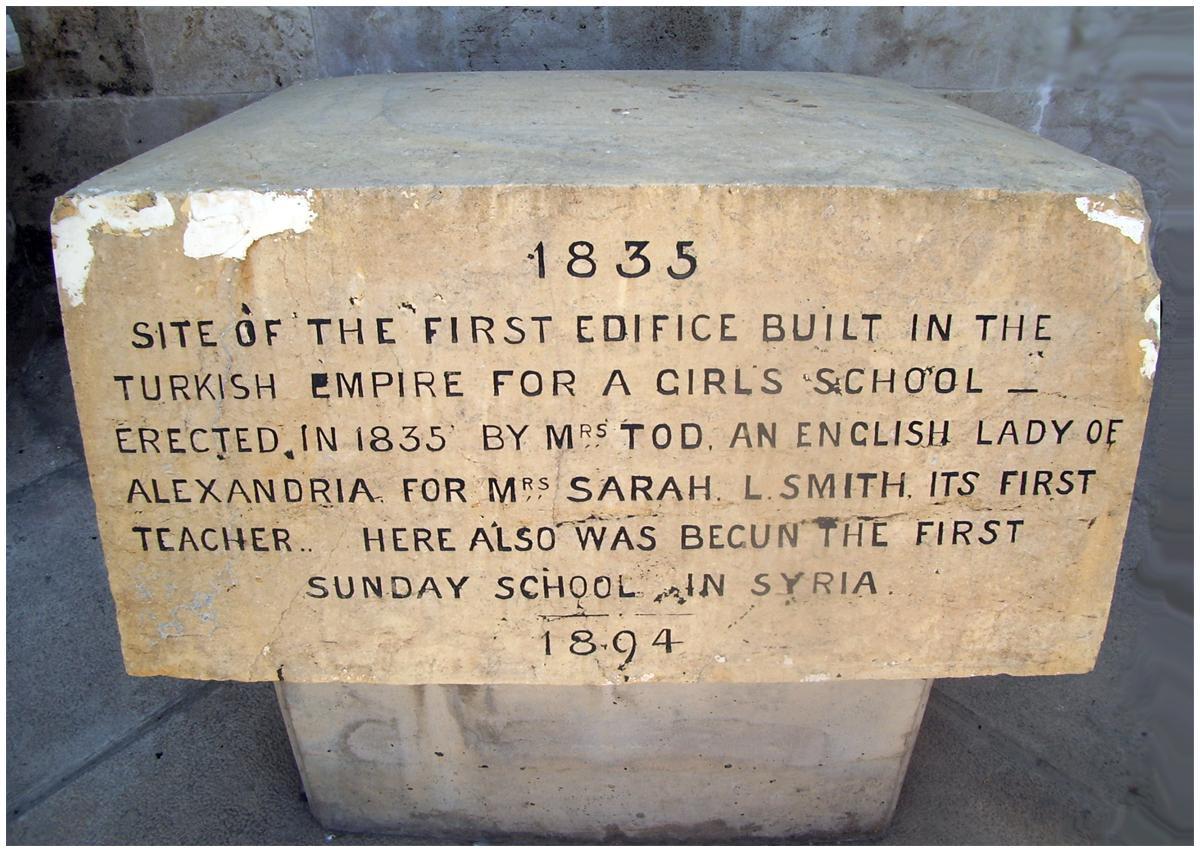
This monument stands today at the National Evangelical Church in Beirut. The inscription refers to the American School for Girls, established in Beirut in 1835 by Sarah L. Smith. The ASG inaugurated an important shift in education for women in Syria and the surrounding region.
Over decades it became known as the best female boarding school in the region as it drew more and more students from various locations.
In June 1836 Sarah’s health was failing due to a severe case of tuberculosis. So she and her husband set sail for for Smyrna (today’s Turkey) for treatment. Unfortunately, her suffering increased because the vessel in which they sailed was old and uncomfortable. During the fifth night after leaving Beirut, the vessel wrecked on the north side of the island of Cyprus and the voyagers barely escaped. Eventually, they landed on a sandy shore, in a destitute condition. Sarah and her husband arrived at Smyrna 33 days after they left Beirut. Her strength gradually failed and Sarah passed away on September 30, 1836.
Acknowledgements
“Memoir of Mrs. Sarah Lanman Smith,” (1894), by Edward W. Hooker
“Heroines of the Missionary Enterprise: Or, Sketches of Prominent Female Missionaries,” Chapter VI, (1850), by Daniel Clarke Eddy
Portrait of Mrs. Sarah Lanman (Huntington) Smith, painted by Samuel L. Waldo, engraved by John Sartain. As shown in “Not in Our Neighborhood,” by Linford D. Fisher
Sarah L. Huntington Smith stained glass window and portrait located in Norwich’s Park Church
The complete list of sources may be found by clicking the “Bibliography” button, and, then typing “Huntington Smith” in the SEARCH box.