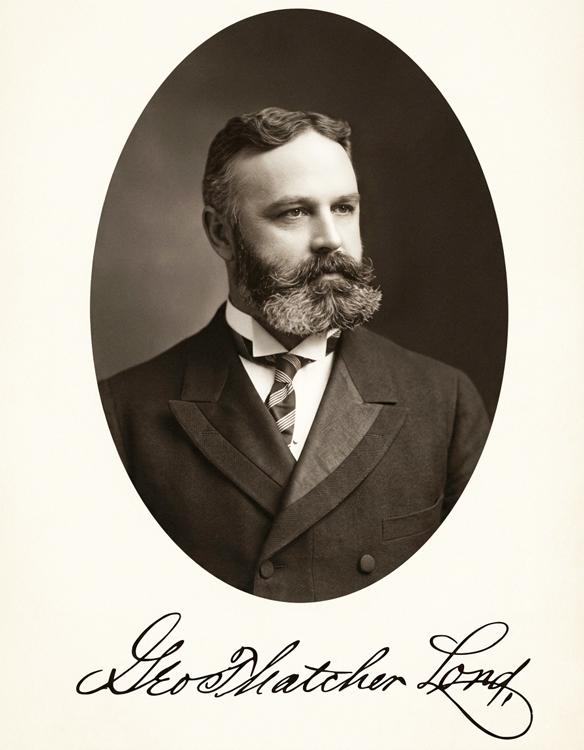
George Thatcher Lord was born in Portland, Connecticut, in 1863, and spent his youth in Colchester, where he attended local district schools and graduated from the Bacon Academy. Before finding his true calling, he dedicated ten years of his life to the railroad service, working as a dependable agent for the New York, New Haven & Hartford Railway Co. Seeking new business opportunities, Lord relocated to Norwich in 1895 and entered into a partnership to establish the undertaking firm of Roadstrand & Lord.
In Norwich, Lord quickly distinguished himself in a highly competitive market. On November 17, 1897, he bought out his partner’s interest to become the sole owner of the business. Although long-established firms already dominated the local undertaking industry, Lord achieved rapid success through his friendly, tactful manner and sincere courtesy when dealing with grieving patrons. He revolutionized the business in Norwich by introducing modern ideas, equipment, and facilities that set his services apart from competitors.
His exceptional reputation within the profession soon brought him statewide recognition. In June 1903, Connecticut Governor Abiram Chamberlain appointed Lord to the newly created State Board of Examiners of Embalmers, and his peers elected him president of the board the following month. In Norwich, he was highly active in fraternal and social circles, achieving the status of a thirty-second-degree Mason in St. James Lodge No. 23 and holding memberships in the Arcanum Club, the Sons of the American Revolution, and the Sons of Veterans. Politically a Republican, he and his wife were deeply involved in local spiritual life as communicants of Christ Episcopal Church.
Lord continued to operate his highly successful Norwich business until 1907, when he sold the undertaking establishment to the firm of Church and Allen Funeral Service. He subsequently spent his remaining years working as the Eastern representative for the Durfee Manufacturing Company, managing a territory that stretched from Maine to Tennessee.
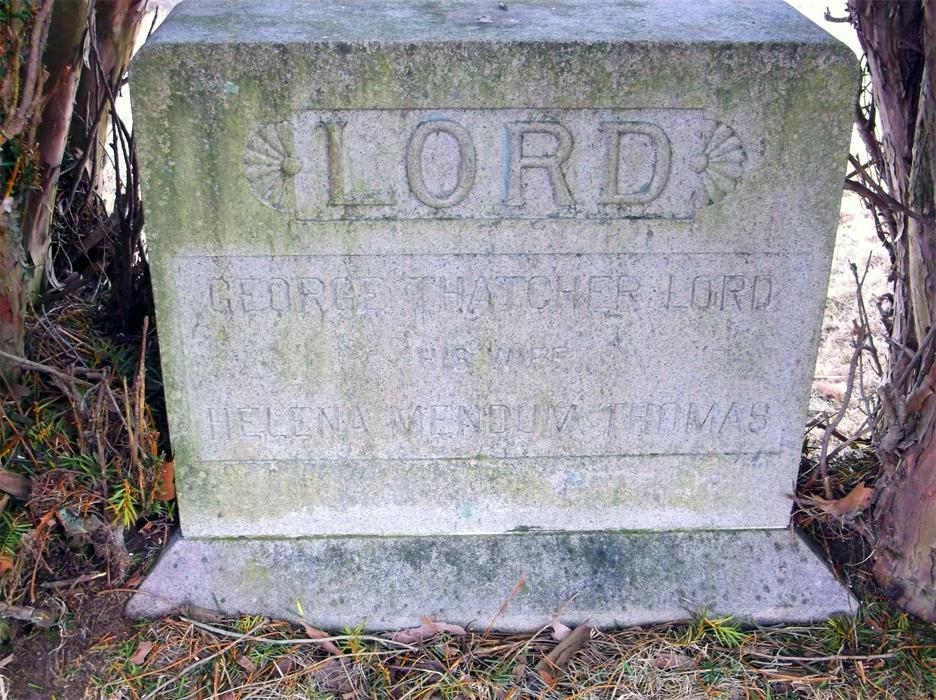
Following a long illness that kept him an invalid for over a year, Lord passed away on Friday morning, October 29, 1915, at the age of 52, at his family home at 83 Washington Street in Norwich. His personal life was defined by his deep devotion to his family. On November 17, 1892, he married Helena Mendum Thomas of Philadelphia in Asbury Park, New Jersey. Helena, who inherited her musical talents from her father—the noted physician and tenor singer Dr. Franklin R. Thomas—was a well-known vocalist who had completed her musical training in New York.
Together, they raised three children in Norwich: Ruth Janette (who later married Edward Brown Coy), Franklin Thatcher (who later attended the New York Military Academy), and Lucille Otis.
Charles S. Johnson was one of the sons of William G. Johnson, the founder of Johnson’s Dye Works. Along with his brother, Edwin C. Johnson, Charles took over the active management and operation of the family business from 1871 to 1886.
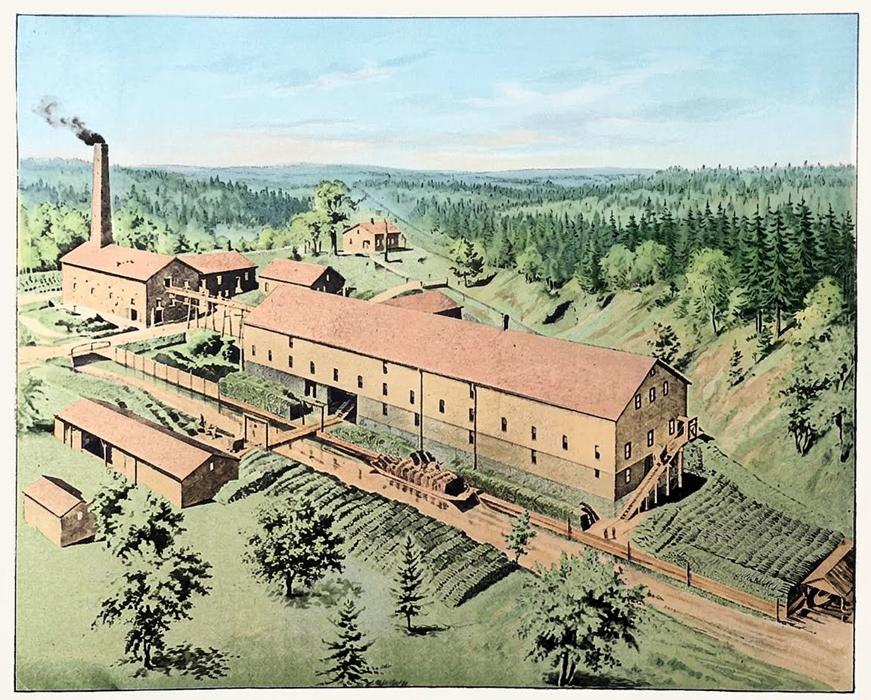
Prior to their joint management, the dye works—originally established in Montville in 1834—had been run solely by their father. Following Charles and Edwin’s period of leadership in 1886, their father resumed control of the business in his old age, managing it until his death in 1892. In January of that year, Charles’s brother, Henry G. Johnson, purchased the works from their father’s estate, becoming the new sole proprietor.
The Johnsons’ Dye Works produced dyes for manufacturing from wood imported from Haiti. The company employed 18 people and produced approximately 100 barrels of dye per week. The finished dye was black, brown, or blue, made in either solid or liquid form.
Mr. Johnson was married to Sarah A. Savage, and they had three children, Amos, Edwin, and Charles A.