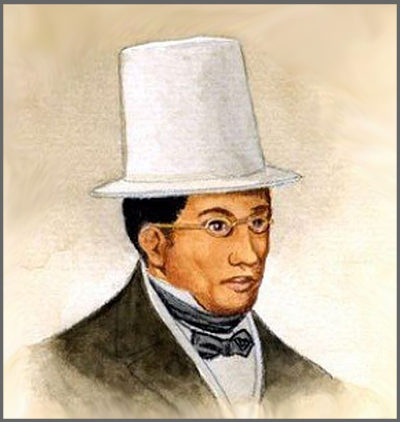
David Ruggles was born on the family homestead on Bean Hill area of Norwich, CT in 1810. He was the oldest of seven children of Nancy and David Ruggles, Sr., a local blacksmith. The family attended a nearby Methodist church. David received his education through a local charity school. At seventeen, David moved to New York City, where in 1828, he started his grocery business, which later evolved into a bookstore, thus becoming the owner of the first African American bookstore in New York City.
Showing great courage in the face of violent opposition, David soon became an active participant in the country’s antislavery movement, publishing numerous pamphlets and books, and writing articles for antislavery magazines and newspapers that promoted abolitionist values. As co-founder, Ruggles served as secretary for the New York Vigilance Society.
David Ruggles actively sought out runaways in barns, the houses of Southern plantation owners, and the holds of cargo ships in New York Harbor, helping them escape and leading them to safe houses. He often defended free blacks who were being abducted into slavery through an unfair trial. It has been estimated that David helped over 600 enslaved people, including Frederick Douglass, to freedom through the Underground Railroad.
Proslavery supporters, angered by David’s activities, often turned to violence, and he suffered beatings and threats of kidnapping. An angry mob burned his bookstore. With his health failing, David left New York and headed for Northampton, Massachusetts, where he underwent hydrotherapy (the water cure). This method achieved some healing for David, who went on to study hydrotherapy and opened a small practice while continuing to be active in the abolitionist movement.
David died in 1849 in Florence, Massachusetts, at the young age of thirty-eight. His remains were returned to Norwich for burial in the Ruggles family plot at Yantic Cemetery.
References