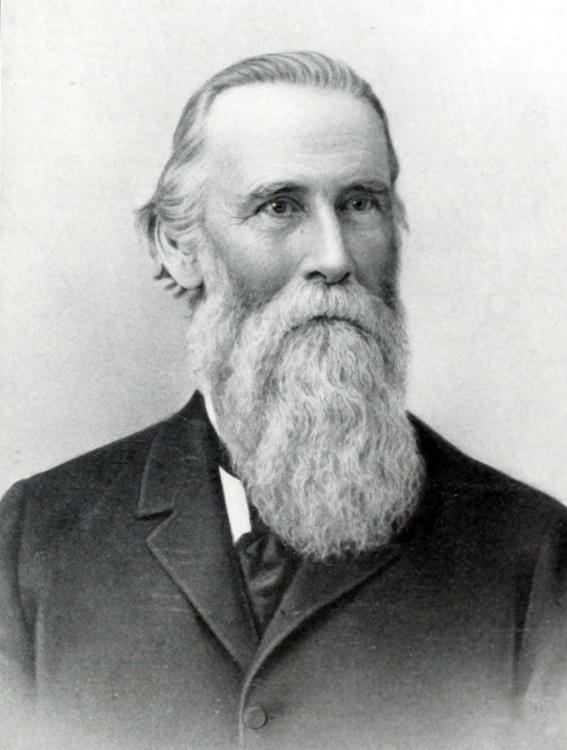
William H. Jennings was born in Eagleville, Connecticut, on August 10, 1819. He came from Revolutionary War ancestry and was raised in a large family of eight children. After his father died when he was only four years old, Jennings was forced to rely on his own determination to secure an education and prepare himself for a career in teaching. As a young man, his professional journey led him to Norwich, where he taught school in the village of Greeneville. He achieved great success as an instructor, earning a reputation for maintaining excellent classroom discipline while remaining highly popular among his pupils.
After a brief but successful two-year venture to California during the 1849 Gold Rush, Jennings returned to Norwich to permanently establish his roots and embark on a new pioneering career. He became the city’s pioneer photographer and was among the first to produce daguerreotypes in the area. Over thirty-five years, he operated his studios—first in the Boswell building and later above the Boston Store—gaining renown as the best-known and most artistic photographer in eastern Connecticut. Upon his retirement from business, he dedicated his time to managing his private property on Laurel Hill.
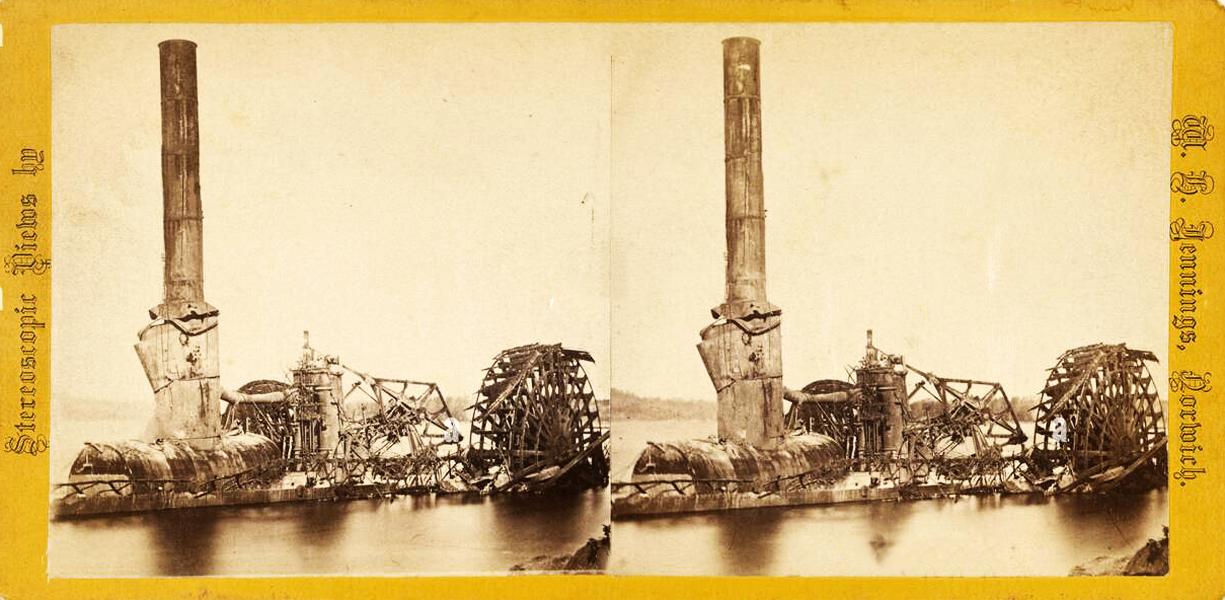
Mr. Jennings took these stereoscopic views in late November of 1871. The photo shows the tragic results of the fire on the steamship City of New London. Twelve people died in the accident. Click HERE to read more about the accident.
Jennings was widely respected in the Norwich community for his intellectual curiosity, deep love of reading, and exemplary character. He possessed a kindly disposition and was known as a true “home man” who quietly commanded the complete confidence of his fellow citizens. Though he never actively sought public office, his popularity and unsolicited honors led him to serve with distinction on the Norwich common council and in various other town offices.
Jennings’s deep family ties to Norwich spanned generations, beginning with his marriage to Nancy Rogers, with whom he raised two children, William H. Jr. and Ella. His family continued to leave a major mark on the city’s professional landscape; his only son, William H. Jennings Jr.—who shared his father’s genial, happy disposition and immense popularity—became a prominent New London County lawyer and city court judge in Norwich. Following the untimely deaths of both his son and daughter, Jennings’s grandson, William H. Jennings III, remained in the family’s Laurel Hill home as the third generation to carry on the family name and legacy in Norwich.
He was a devoted member of the Broadway Congregational Church and lived a model life until his death on October 27, 1898, in Laurel Hill. He died following a paralyzing illness during which he was lovingly cared for by his daughter-in-law. He was laid to rest in Norwich’s Yantic Cemetery.
References
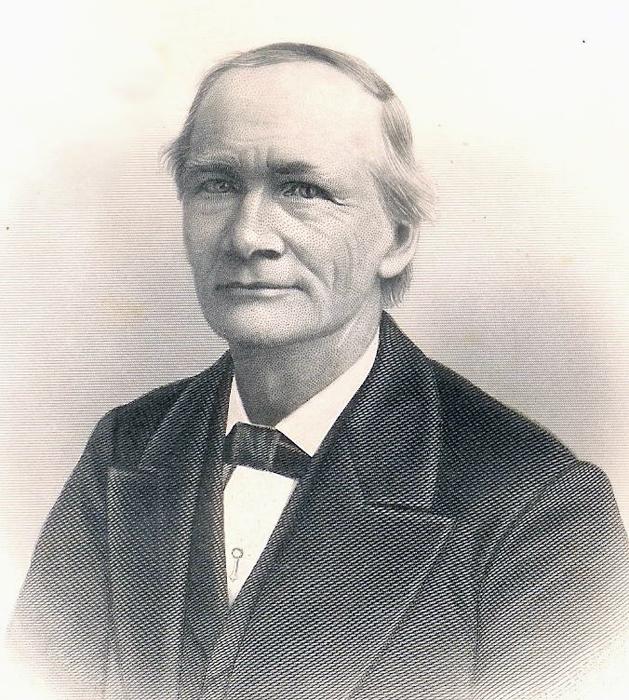
John Mitchell was born in Stourbridge, near Birmingham, England, on August 29, 1819. In 1828, his family emigrated to America, first residing in New York City before moving to Wareham, Massachusetts. The iron industry was a deep-seated heirloom in the Mitchell family, prompting them to settle permanently in Norwich, Connecticut, in 1845, when John’s father, Thomas, took over management of the Cold Spring Iron-Works in Thamesville. Although John received very little formal schooling, he started at the bottom of the mill and thoroughly mastered every detail of the iron trade, using a wonderfully retentive memory and keen observation to become a highly respected, well-informed industrial leader.
Over the next forty-five years, Mitchell became a driving force behind Norwich’s commercial progress. Following his father’s purchase of the Cold Spring Iron-Works in 1850, John ran the enterprise with partner James M. Huntington, and later with his brother Thomas Mitchell Jr. under the firm name Mitchell Brothers.
The Mitchell Brothers built eleven vessels, nine of which were steamers, constructing not only the hulls but also the entire machinery. Three of these steamers, the Uncas, the Norwich, and the Whirlwind, were in the service of the government during the Civil War. Mitchell’s operations played a vital national role during the Civil War by supplying large quantities of iron to the United States Government for the Springfield Armory.
John Mitchell expanded his local holdings by purchasing the Thames Iron Works in 1879, and though Western competition ultimately forced him to close his mills in 1891, his industrial endeavors left a permanent mark on the city’s growth.
Beyond his iron mills, Mitchell was heavily identified with the broader financial and commercial development of Norwich. He was connected to the Norwich Savings Society for thirty years, serving as its president during the final five years of his life, and was a director of both the Thames National Bank and the Thames Loan and Trust Company. He was also a founder and seventeen-year president of the Richmond Stove Company, served on the original board of directors of the Uncas Paper Company, and served as a director of the Crescent Fire Arms Company.
Mitchell was equally active in the civic, educational, and spiritual welfare of his adopted city. As a stanch Republican, he served the city for two years as a member of the Court of Common Council. He was a passionate champion of free education, serving as a trustee and fellow of the Norwich Free Academy corporation, and gave his time to support both the YMCA and the United Workers. In his spiritual life, he was a dedicated member and generous supporter of the Second Congregational Church of Norwich. Outside his busy professional life, Mitchell was a kind and courteous gentleman who found his chief recreation in fishing, and he lived in Norwich until his death on January 7, 1901.
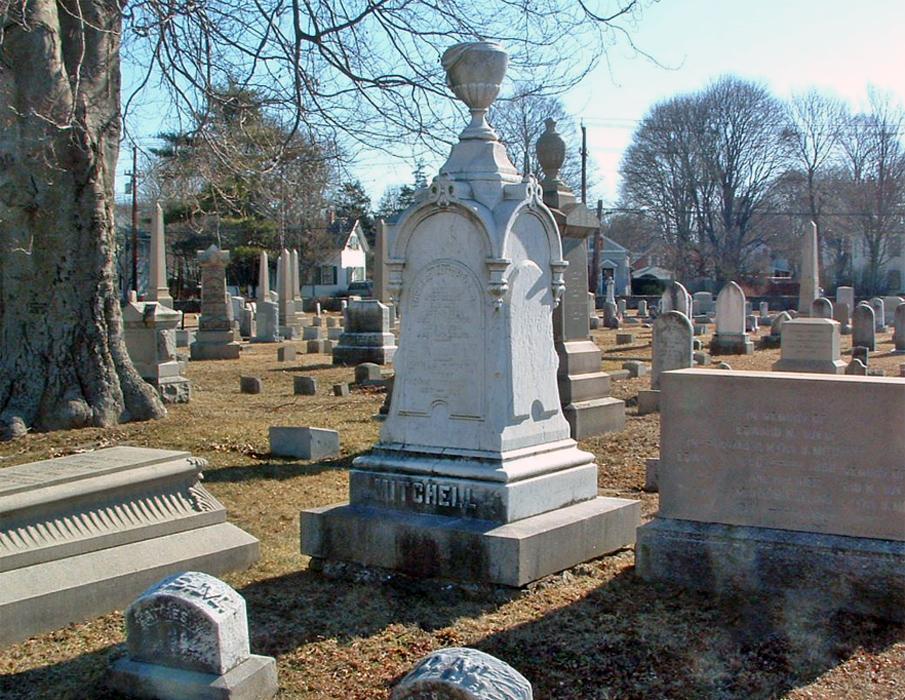
His personal life was centered around deep family ties, beginning with his marriage to Joanna Dexter Gibbs of Wareham on June 6, 1841. Together they had four children, though two tragically died in infancy. His surviving eldest son, Albert G. Mitchell, resided in Norwich, partnered with his father in the iron business, and raised a son, John L., who worked as a clerk in the First National Bank.
His younger son, Frank A. Mitchell, also partnered in the family business, represented Norwich in the State Legislature, and raised a daughter, Joanna. At his death, John was survived by his wife, his two sons, and his four siblings—Charles, William, Mrs. George W. Geer, and Mrs. Francis Davis—who all resided in Norwich.
*Place your cursor over the photo to magnify
References
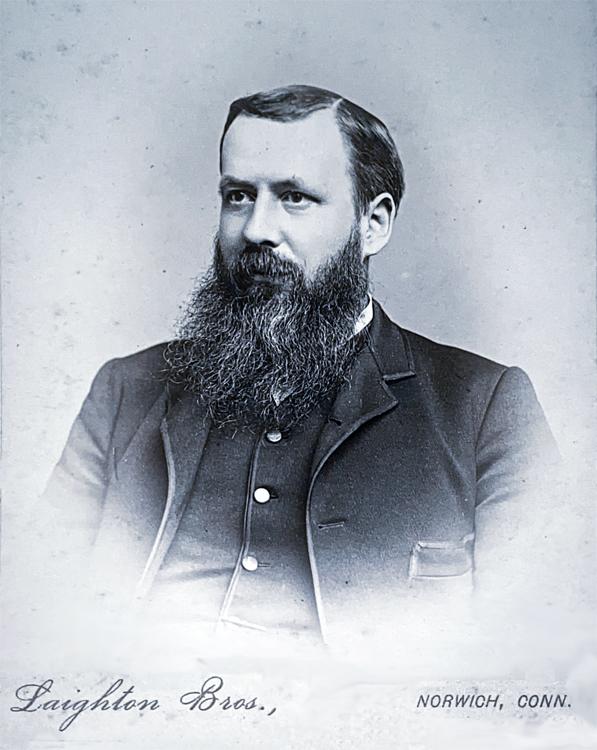
Ira L. Peck was prominent in business, finance, and politics for many years. He was born in Monson, Massachusetts, on August 16, 1841, one of four children of Mr. and Mrs. Lucius Peck. Ira graduated from Poughkeepsie Business College.
When the Civil War broke out, Ira enlisted as a Sergeant in the Forty-Sixth Regiment, Massachusetts Volunteers. Following the war, he received an honorable discharge and was one of the oldest members of Sedwick Post No. 1 Grand Army of the Republic.
Peck came to Norwich in 1864 and worked as bookkeeper for the A. H. Hubbard paper-making company in Greeneville, where he remained for 16 years. Ira next took a position with the Second National Bank, first as bookkeeper and later as bank treasurer. He left the bank after 23 years when the business was liquidated in 1903. He then turned to A. A. Beckwith, a grain merchant located on Water Street, where he held the position of head bookkeeper until his death eight years later.
In June 1905, after being nominated by the Republican Party, Ira Peck was elected City Treasurer. In recognition of his financial skills, both the Republican and Democratic Parties repeatedly nominated Ira for City Treasurer in the following years.
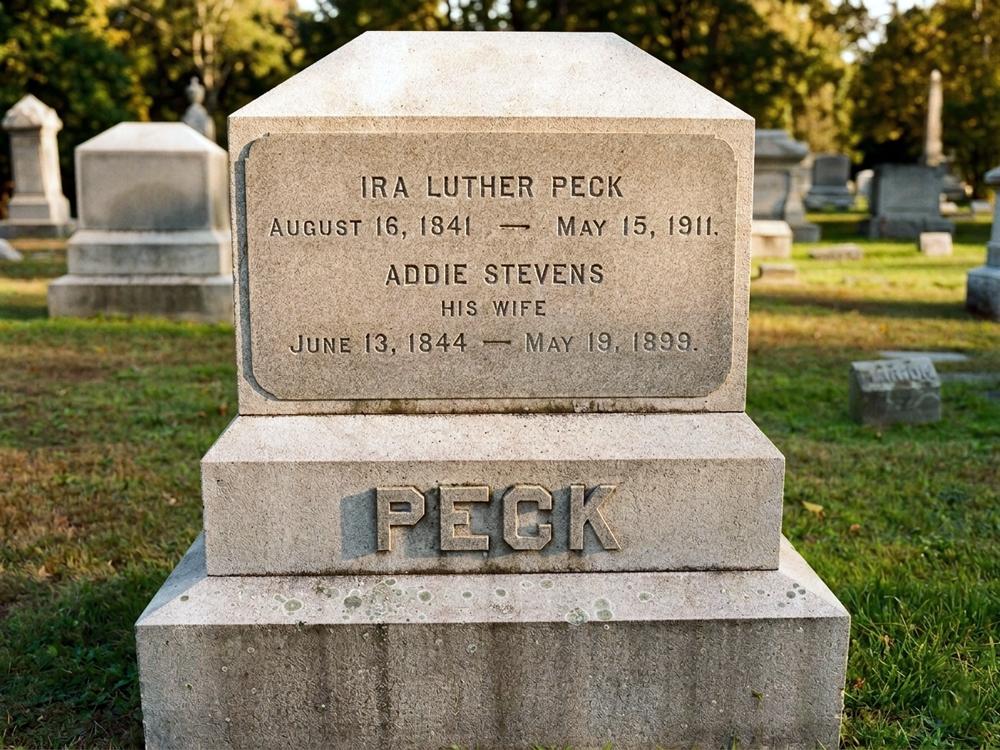
Ira Peck married Adaline Stevens in Norwich, daughter of Aaron Stevens, on April 17, 1866. She was Dwight Aaron Stevens’ younger half-sister.
The service was performed by Rev. Hiram P. Arms of the First Congregational Church in Norwichtown.
Adaline “Addie” died May 19, 1899. The couple had no children.
Ira died twelve years later on May 15, 1911, in his home at 27 McKinley Avenue.
*Place your cursor over the photo to magnify
References