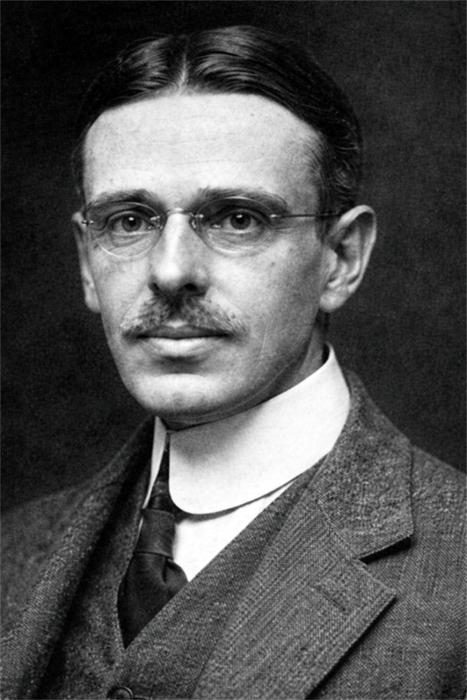
William Tyler Olcott
The Yantic Cemetery is the final resting place for thousands of residents who once lived in Norwich. They knew firsthand of a city and the stories of its people that we can only read about now in yellowing copies of the Norwich Bulletin. William Tyler Olcott (1873 – 1936) was a prominent Norwich resident who lived in the old Glebe House located at 62 Church Street. During his lifetime, he developed a keen fascination for observing the planets and stars and rose to international recognition as a world-class astronomer.
Born in Chicago, William soon moved with his family to Norwich. He graduated from Trinity College and, after attending New York Law School, was admitted to the bar. A chronic bronchial condition limited his legal career and forced William (and his wife, Clara) to travel throughout the southern parts of this country for his health. It was during these trips that William focused on his true passion, astronomy. He combined numerous lectures with visits to observatories throughout this country and, later on, Europe.
He published several books, including “The Book of the Stars” and “Field Book of the Skies,” which were widely read and promoted amateur astronomy. In 1911, Olcott helped to found the American Association of Variable Star Observers (AAVSO), which is still active today. A variable star is one that varies in brightness due to internal processes or by the eclipsing orbits of nearby stars. The AAVSO annually awards the “William Tyler Olcott Award” to an outstanding amateur astronomer. In 1970, NASA honored Olcott for his contributions to astronomy by naming a crater on the Moon after him.
In about 1920, William had an observatory built in the attic of their home at 62 Church Street. It was octagonal, had a ten-foot diameter, and occupied the rear roof area of the house. Rollers allowed it to turn so the telescope could follow the path of stars. Olcott called it Starlight House. In 1954, the Otis Library purchased the house and removed the observatory in preparation for using it as the Otis Children’s Library.
William Tyler Olcott passed away on July 6, 1936; the funeral was held at Christ Episcopal Church in Norwich. His granite monument can be found in section 96 in Yantic Cemetery.
References
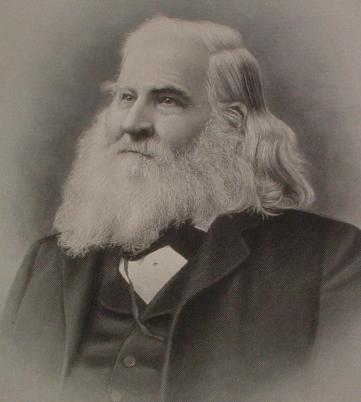
Moses Pierce was born in Pawtucket, RI (then known as North Providence) in July 1808, the eldest son of eight children of Benjamin B. and Susan (Walker) Pierce, a tanner and later a cotton manufacturer. Moses received his literary training in local schools. At the age of twelve, he began working as a chore boy in a factory store, earning seventy-five cents a week. At fourteen, he became the bookkeeper, and until he was twenty, he held this role and a variety of other jobs, which provided him with a thorough understanding of the cotton manufacturing business.
In 1828, he relocated to Willimantic, where he served as superintendent of one of the newly established mills. Pierce later joined with several investors to build and superintend mills in Massachusetts and Rhode Island. In 1839, Pierce was invited to visit Norwich, CT, to assess opportunities in the rapidly developing bleaching business. In September 1840, the Norwich Bleaching, Dyeing & Printing Co. capitalized at $200,000, began operations with Moses Pierce at the head, where he remained for the next forty-eight years.
The company grew to become one of the largest establishments of its kind in the United States, with an annual output of 60 million yards of finished cloth. In 1863, Moses united with approximately twenty investors to form the Occum Company, whose goal was to acquire land and water rights, thereby enabling them to control the Shetucket River from the tail race of the Baltic mill to the upper end of the Greeneville Pond. Three years later, Taftville began its career. The company was capitalized at $1.5 million, an unheard-of sum at the time. Pierce became director of the company and held that position until 1887, when he sold his controlling stock.
Other business ventures included the Ashland Cotton Co. in Jewett City, where he served as president for thirty-five years, and the Aspinhook Co., also located in Jewett City. Moses built the dam located nearby across the Quinebaug River and later opened a bleaching & calendaring company below the dam. The business prominently associated with Moses Pierce employed approximately 2,000 people, with an annual payroll of at least $1 million. The Norwich Board of Trade listed his yearly income at $11,126 in 1865.
In politics, Pierce was a strong supporter of the temperance movement and an Abolitionist. In 1854, he represented his district in the state legislature. He was a member of Norwichtown’s First Congregational Church for many years, later transferring to Park Congregational Church in his later life. Pierce demonstrated his support for his community through many charitable gifts. In 1878, he donated a large house on the Norwichtown Green to the United Workers, known as the Rock Nook Children’s Home.
In 1858, Mr. Pierce was elected director of the Norwich & Worcester Railroad. He served as President of the Norwich & New York Steamboat Company for eleven years and was a board member of the Second National Bank and the Chelsea Savings Bank. He was the VP for an investor group that met at the Franklin Institute in Philadelphia. He was a member of the Metropolitan Museum in New York and a fellow at the American Geographical Society, also in New York. In his many travels, for business or pleasure, Moses Pierce crossed the Atlantic eight times.
References