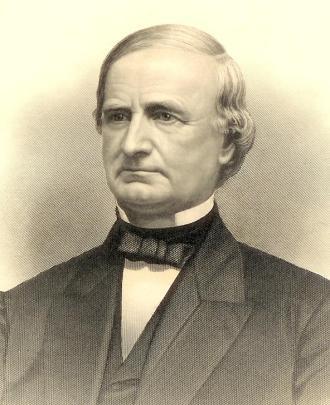
David Smith was born in Norwich in September 1796. He began his business career in Windham, where he gained valuable experience in the manufacture of paper. His early success in this comparatively new industry, combined with his high personal character, earned him an invitation to join the Chelsea Mfg. Paper Mill in Greeneville, which he accepted in 1833. Mr. Smith was for many years a prominent proprietor of the mill, which achieved remarkable success under his direction. The company, which produces high-grade book, writing, and coated lithograph paper, had an output of thirty tons of finished product a day and, in 1860, claimed to be the largest paper-making establishment in the world. The main building was 375 feet in length.
The operation used twenty-six engines to grind and clean the rags, and six more to convert the pulp to paper. The company employed 200 people and had an annual output valued at $475,000. In 1864, the Norwich Board of Trade lists David Smith’s yearly income at $13,331 ($307,000 today). As a resident of Greeneville, Mr. Smith, by his public spirit and benevolence, did everything in his power toward the building up of that part of the town. He was an active member of the Greeneville Congregational Church and made generous contributions on its behalf.
In 1856, he moved to the city of Norwich, where he built a fine residence and was a liberal donor to the Second Congregational Church in the town during its remodeling. Later, he became a member and generous contributor to Park Congregational Church. In 1858, he retired from the paper manufacturing business. From this time onward, he was involved with several business enterprises. He was a director of the Norwich Water-Power Company and president of the Jewett City Bank for twenty years. He was a primary organizer of the Norwich and New York Transportation Company, capitalized at $350,000, and served as its second president until 1873, when he declined re-election. Interested in all that promised to promote the general growth of Norwich, he was a director of both the Norwich & Worcester Railroad and the New London Northern Railroad. He was the second president of the Second National Bank in Norwich. He was the vice president of the Chelsea Savings Bank. David Smith represented the town for one year in the State Senate.
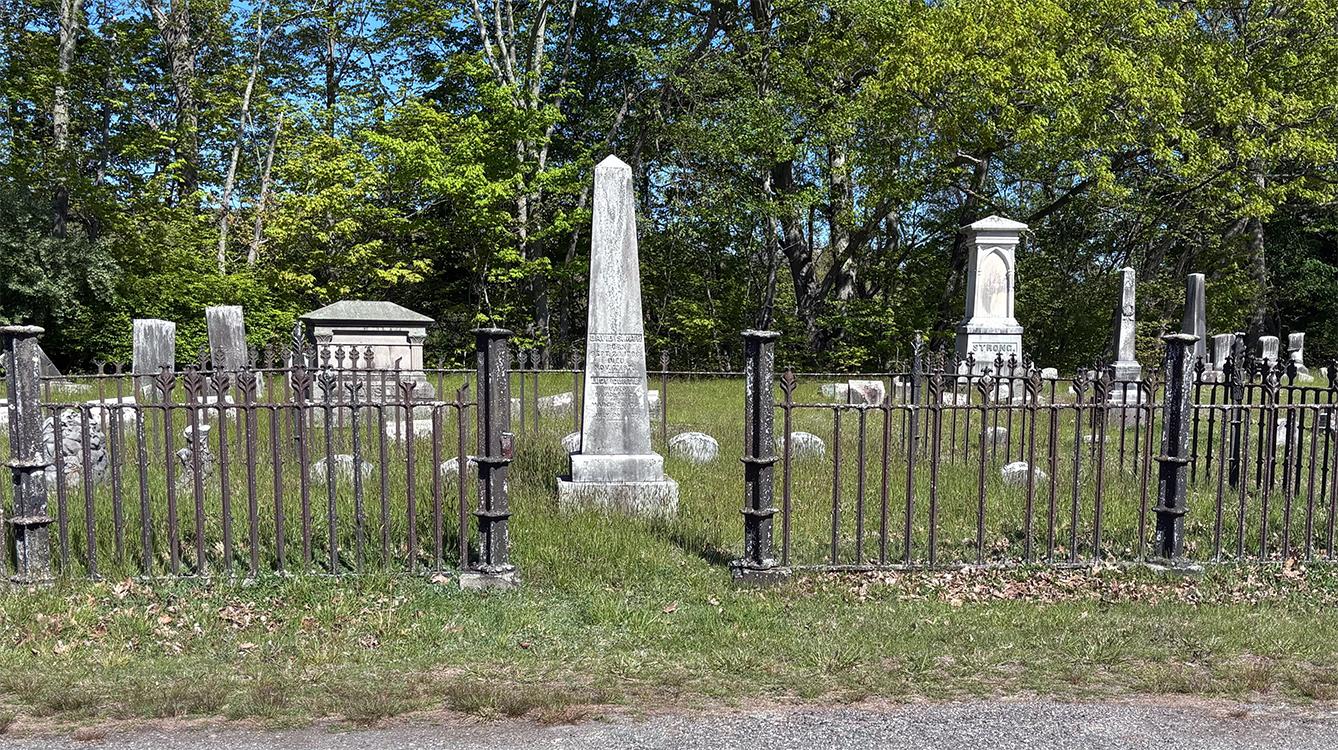
Mr. Smith died in November 1873. He and his family are interred in Yantic Cemetery in Section 29, as shown below.
References
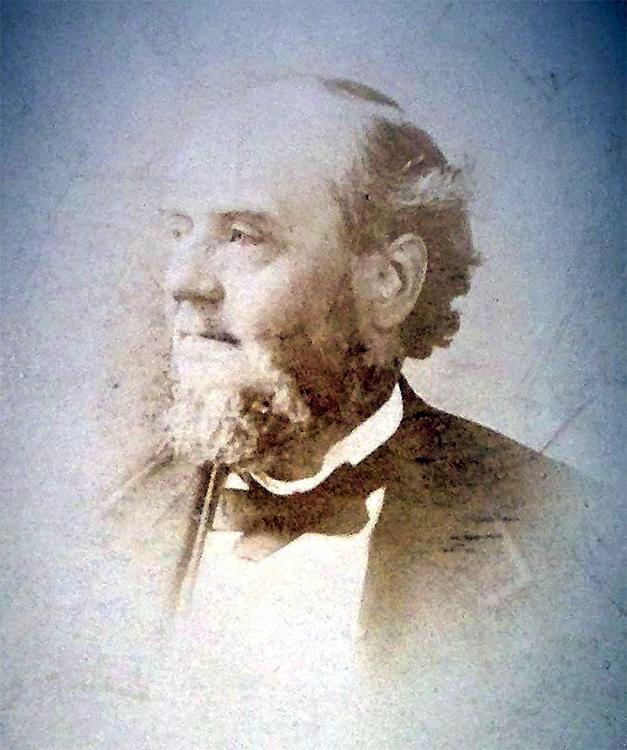
James Dixon Mowry was born on November 5, 1820, in Canterbury, CT.
He, his father, Deacon Samuel Mowry of the Greeneville Congregational Church, and his grandfather, Havilah Mowry Sr., were all prominent in the affairs of Norwich and its manufacturers. As a young man, he served as Secretary of his father’s Axle & Machine Company based in Greeneville.
He later founded the Mowry Machine Company, and in January 1862, he contracted to furnish the government with 30,000 rifle muskets of the latest Springfield construction. The barrels were made at Cole & Walker Machine Shop in Norwich, the locks by CB Rogers & Company of West Chelsea (today’s Westside of Norwich), and other pieces at Mowry’s factory in Greeneville.
He later became the Secretary of the Page Wood Type Company. After several years, he was selected as its president and served in that role from 1800 to 1895.
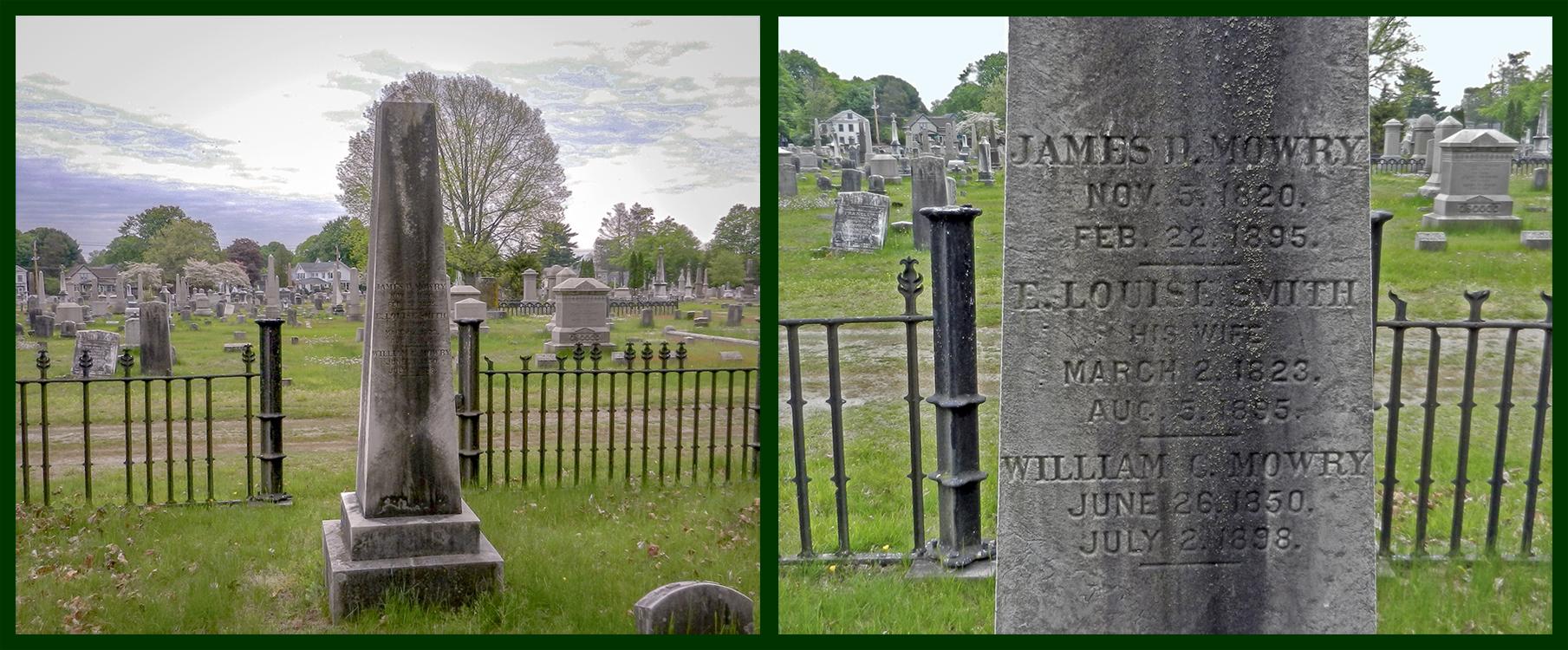
He married Emily Louise Smith on March 19, 1844. She was David Smith’s eldest daughter. Her father and several other members of her family are also buried in Section 29 of Yantice Cemetery
James’ and Emily’s children were:
David Smith: March 1845
Colonel William Cary: June 1850
Susan Louise: July 1858
Lucy Curtis: September 1861
His son, Colonel William Cary Mowry, became the Aide-de-camp for Connecticut’s Governor Henry B. Harrison.
James Dixon Mowry died at his home on February 22, 1895, after an illness of several weeks.
References
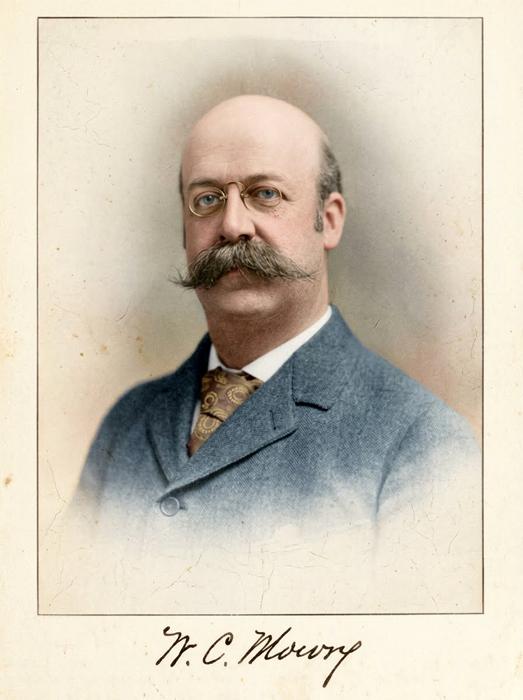
Born in Norwich on June 26, 1850, William C. Mowry began his lifelong connection to the town with his early education at the local Broadway Grammar School and the Norwich Free Academy, from which he graduated in 1868. Although he had prepared himself to enter the Sheffield Scientific School of Yale, a temporary affliction of his eyes prevented him from attending. Once he recovered his sight, he chose to gain a practical, hands-on knowledge of mechanics and business by working for the Mowry Axle and Machine Co. in Greeneville.
Mowry quickly became one of the most prominent industrial and financial figures in the Norwich business community. He served as treasurer and business manager of the Page Steam Heating Company for an extended period and later became managing director of the Hopkins & Allen Manufacturing Company. His financial acumen led him to serve as a director for several of the city’s key institutions, including the Norwich Savings Society, the First National Bank, the Norwich Water Power Company, and the Norwich Gas and Electric Company. He was also highly active in local civic and social circles, helping to organize the Norwich Club and participating in the Arcanum Club and the local Board of Trade.
A dedicated Republican, Mowry took an active interest in public affairs and represented his hometown of Norwich in the Connecticut General Assembly. He served in the legislature in 1889 alongside W.T. Lane and was elected again in 1893 alongside W.H. Palmer Jr., serving on critical legislative committees, including the one that investigated the state prison. His political career peaked when he served as an aide-de-camp on the staff of Governor Henry B. Harrison in 1886. He was elected Secretary of State for Connecticut in 1894, securing the largest vote of any candidate on the Republican ticket.
Mowry’s local legacy was also deeply tied to his religious and fraternal activities in the city. He was an active member of the Park Congregational Church in Norwich, serving on its Society Committee, and was highly prominent in the local Masonic community. After joining the Somerset Lodge No. 34 F & AM in 1882, he attained the thirty-second degree and played a pivotal role in the construction of the Masonic Temple at 91 Broad Street in Norwich during 1893 and 1894. Despite his failing health, he served faithfully on the temple’s building committee and was vice president of the Masonic Temple Corporation at the time of his death.
Mowry’s family was one of long and honorable standing in Eastern Connecticut, representing successive generations of prominent regional industrialists. He was the son of James Dixon Mowry and E. Louise Smith Mowry, and was a ninth-generation descendant of Nathaniel Mowry, one of the early settlers of Providence, Rhode Island.
References