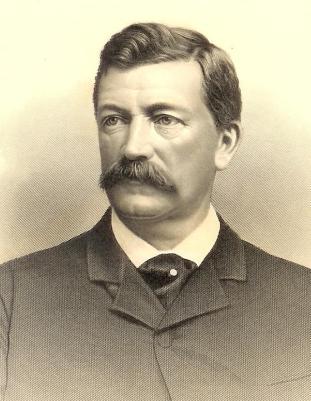
Erastus Winslow Williams became a leading woolen manufacturer in Eastern Connecticut. He was born in Norwich in 1830, the son of Capt. Erastus Williams of Essex, Connecticut. Mr. Williams graduated from Trinity College in 1853 and, in 1854, following his father’s death, took over the operation of the Yantic Woolen Mills. In 1865, the buildings, which had stood since 1822, burned down. That same year, they built new stone mill buildings to replace those lost to the fire. Civil War demand boosted production, and that growth lasted almost forty years.
In 1874, the mill employed 130 workers and produced 35,000 yards of white and colored flannel each week. Winslow’s concern for his community and employees was reflected in the company’s policy of setting aside excess production for sale when needed. This practice kept the mill running smoothly through both good times and bad. Mr. Williams took a great interest in community affairs. His mill was the center of social and recreational activity for the village of Yantic. He was active in the Yantic Fire Company, which his father had founded. He rebuilt the Merchants Hotel in Norwich, which housed the Superior Court of Errors on the third floor. Winslow was trustee and incorporator of the Norwich Free Academy.
In 1867, he built a stately home on the hill east of the village called “Rockclyffe.” Mr. Williams was one of the fifteen hundred citizens chosen to greet President Ulysses S. Grant when he came to Norwich on July 4, 1870. In 1853, Mr. Williams married Miss McNulty of New York had two sons and two daughters. Winslow Williams was an active supporter of Grace Episcopal Church in Yantic, where he lived.
When Winslow Williams died in 1888, a special train took mourners from Norwich to Yantic for his funeral.
After his father’s death in 1888, his son Winslow Tracy Williams took control of the Yantic Woolen Company and continued to run the business successfully. In 1908, he had built the stone bridge across the Yantic River at the private entrance to the family property. When Norwich celebrated its two hundred and fiftieth anniversary in July 1909, W. T. Williams was vice-president of the Planning Committee. He held a reception at his home for President William Howard Taft and other distinguished guests.
Reference
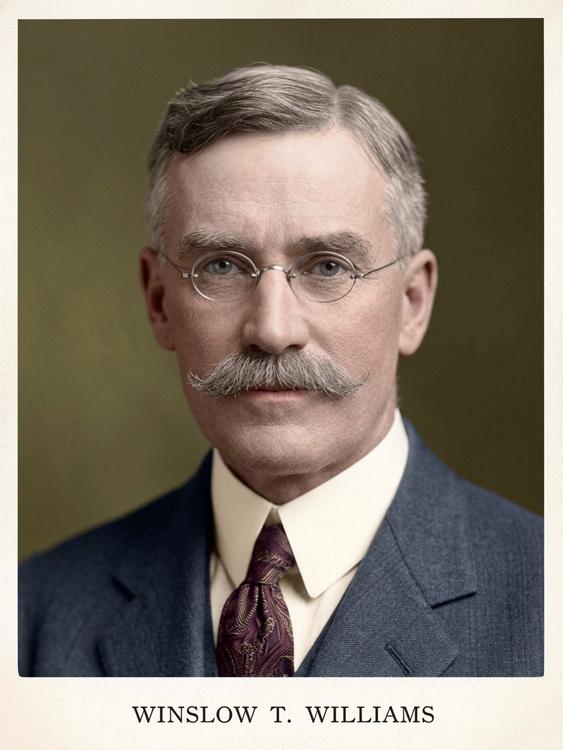
Winslow Tracy Williams was a prominent industrialist and community leader deeply connected to Norwich, Connecticut, particularly the village of Yantic. He controlled the Yantic Woolen Mill and all of its extensive assets and holdings, serving as a vital figure in the local textile industry for many years. Williams lived at “Rockclyffe”, a grand hilltop mansion his father built in 1868. Demonstrating his commitment to improving the town’s infrastructure and aesthetics, he replaced the wooden bridge spanning the Yantic River in 1908 with an ornate stone structure crafted from the same stone quarried for the Yantic Woolen Mill complex. This new bridge featured mirrored guard shacks and built-in benches where travelers could safely rest or fish without obstructing traffic.
Throughout his years in Norwich, Williams took an active role in civic, emergency, and financial institutions. He joined the Yantic Fire Department as an engineer and foreman, providing countless forms of support to the organization over many years. In addition to his fire department involvement, he served as president of Backus Hospital and served on the board of directors of Chelsea Savings Bank. Prior to selling his estate, he demonstrated a strong spirit of public philanthropy by offering Rockclyffe to the State of Connecticut for use as a care facility, though the state ultimately declined the offer in favor of expanding funding for the Norwich State Hospital & Sanitarium.
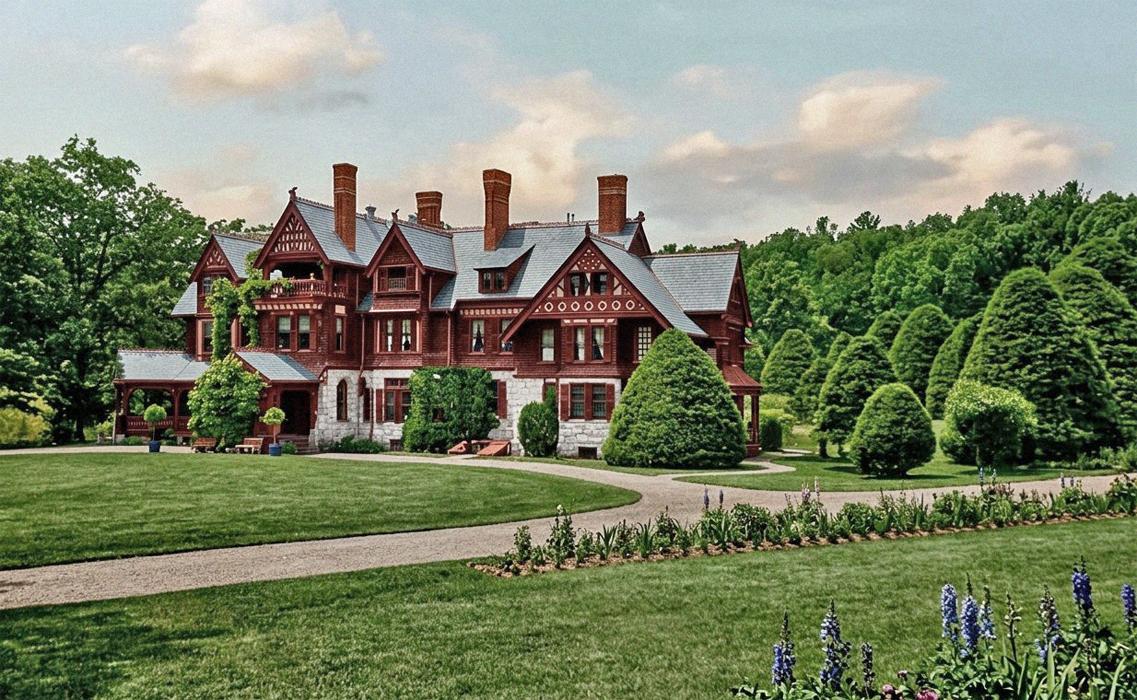
Rockclyffe Mansion in Yantic
Williams’s civic leadership reached a historic high point while planning Norwich’s 250th-Anniversary celebration in July 1909. Serving as vice chairman of the Planning Committee alongside chairman Edwin Avery Tracy, Williams played an instrumental role in organizing the Jubilee. In May 1909, Williams and Tracy traveled to Washington, D.C., to personally invite President William Howard Taft to attend. Undeterred by Washington insiders who predicted failure because of the President’s heavy schedule, their efforts succeeded in intriguing Taft, prompting the committee to reschedule the anniversary festivities to July to accommodate the official presidential visit.
*Place cursor over the photo to magnify
When President Taft arrived for the Jubilee after traveling from Beverly, Massachusetts, with Williams, he stayed at Rockclyffe as a guest of the Williams family. During the anniversary parade, Williams rode alongside the President, who delivered an address to hundreds of spectators on the steps of the Norwich Courthouse.
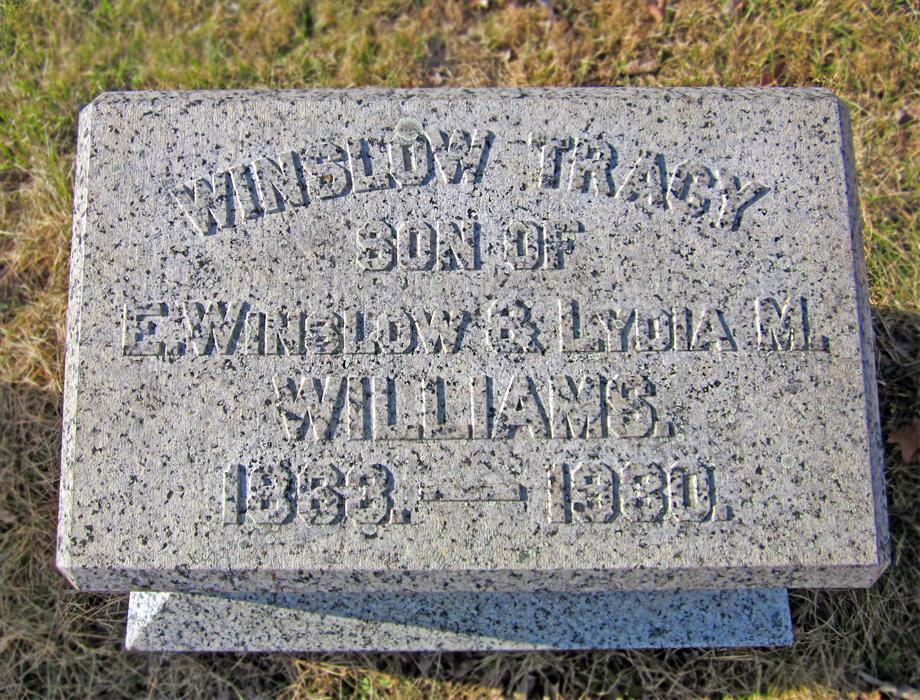
Williams’s personal life was anchored by his distinguished family ties in Norwich. He was the son of Erastus Winslow Williams (1830–1888) and Florence Prentice Williams, residing in the grand Yantic estate his father had originally established. Winslow Tracy Williams and his wife raised two children: a son, Erastus Winslow Williams (1891–1954), who honorably served as a soldier in World War I, and a daughter, Florence Arietta Williams. Through their long-standing stewardship of the Yantic Mill, their civic contributions, and their grand residence at Rockclyffe, the Williams family left an enduring legacy in Norwich.
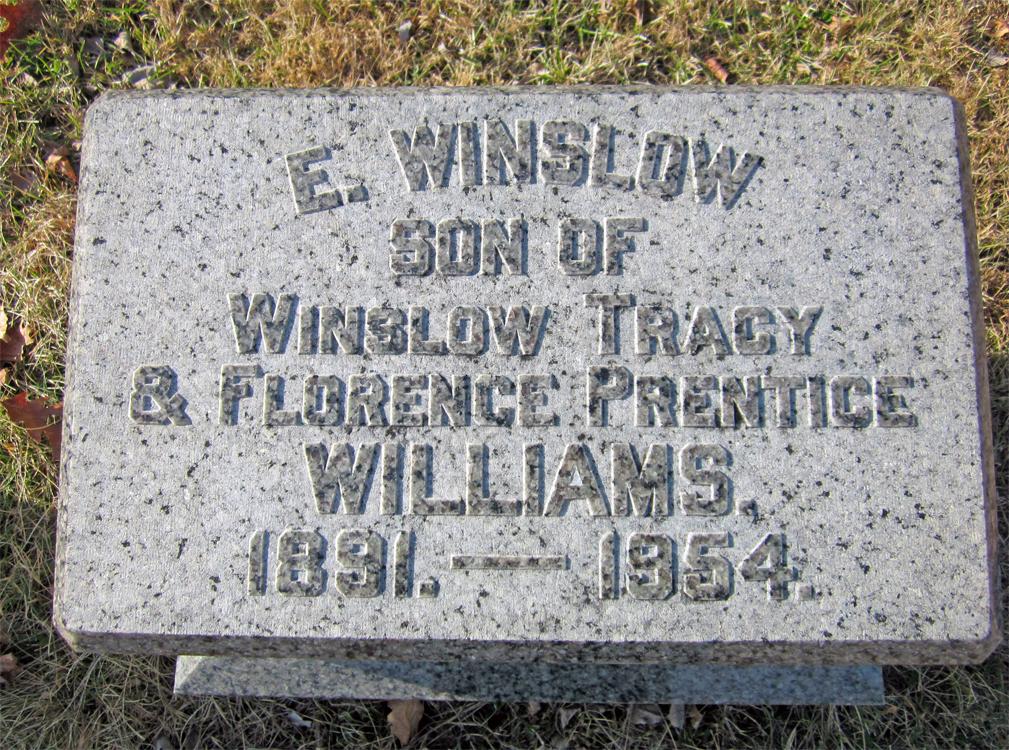
Erastus Winslow Williams was the son of Winslow Tracy Williams and Florence Arietta Williams.
As a young man, he joined the Yantic Fire Department. Later, after World War I broke out, E. Winslow joined the army and served in the war effort. He was seriously wounded and never returned to Norwich.
If you have more information surrounding his life, please send an email to: BobDees@IconicNorwich.org
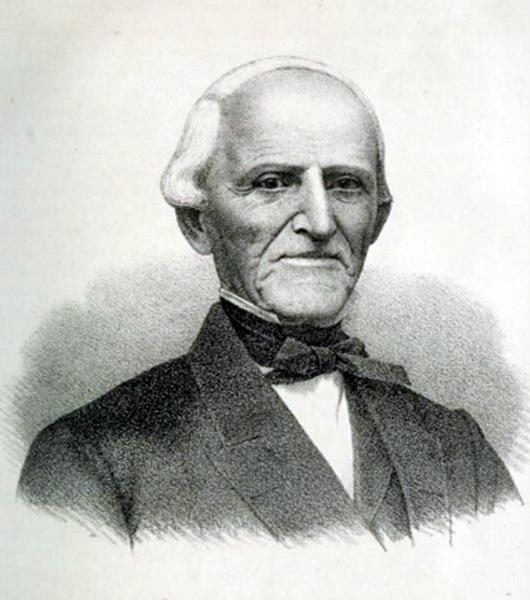
Samuel Coit Morgan, the younger son of Capt. Elisha Morgan, of Newent Society, Lisbon, Ct., and grandson of Capt. Daniel and Elizabeth Morgan of Preston, was born on August 12, 1789. His mother was Olive, the youngest child of Col. Samuel and Sarah Coit of Preston. He received his early education at Bacon Academy in Colchester, Connecticut. Following graduation, he studied law at Yale, where he earned his degree in 1812. Samuel read law in the office of Thomas Day in Hartford and Timothy Pitkin in Farmington and was admitted to the bar in 1815.
Samuel opened his first law office in Jewett City in 1816. During his time in Griswold, he represented the town in the Connecticut General Assembly in 1825, 1830, and 1834. He later practiced law with the Honorable Jeremiah Halsey in Norwich.
As the years passed, Samuel Morgan took a particular interest in the banking business and in 1842 was elected President of the Quinebaug Bank in Norwich, where, a year later, he relocated his home. He served as the bank’s president from 1843 to 1860, when he retired. He relocated to Norwich in 1842, after being elected president of the Quinebaug Bank. In 1865, the bank reorganized and transitioned to the First National Bank of Norwich.
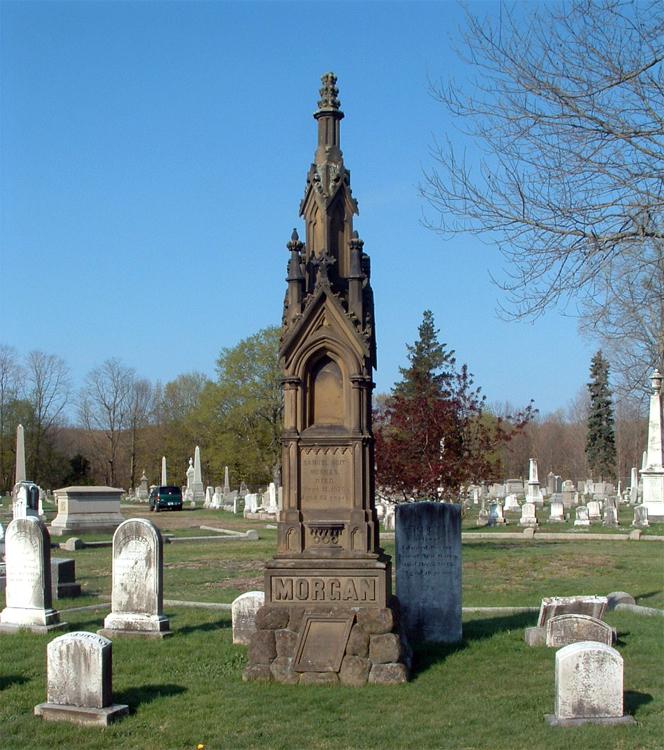
Samuel was married three times. His first marriage was to Maria B. Porter of Farmington in Sept. 1816. She died November 11, 1848. He married Francis A. Cleveland on November 26, 1849. Cleveland, daughter of Moses Cleveland, agent for the Connecticut Land Trust Company, for which the city of Cleveland, Ohio, was named. Francis died on February 18, 1860. Samuel’s third marriage was to Mary C. Tibbits of Jewett City on June 12, 1861. He left no children.
Samuel Morgan died in Norwich on September 11, 1876, at the age of 87 years.
*Place cursor over the photo to magnify
Biographical Sketches of the Graduates of Yale College, Volume VI, 1912; Obituary Records of Graduates of Yale, Volume 7, 1877
Reference