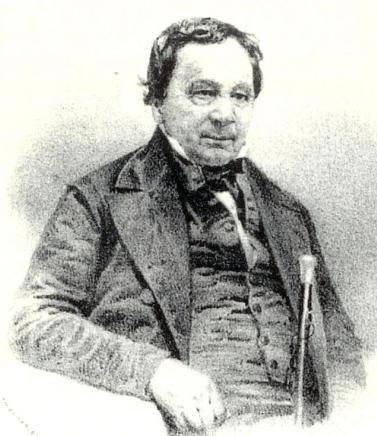
Joseph Otis was born at Norwich, CT, July 1768. Educated locally, at the age of twelve, he became involved in the mercantile service at the Landing, eventually becoming a commission agent, or middleman in today’s terminology, engaged in the import/export business. At age 21, Otis relocated to Charleston, SC, where he remained for seven years. Finding few business prospects, Otis relocated to New York City, where he established a mercantile business in 1796. Later, that same year, at age 29, he married Nancy Huntington, another Norwich native. Following 47 years of marriage, Nancy passed away in 1842 at the age of 72.
Joseph Otis returned to Norwich in 1838, where he lived on Broadway until he died in 1854 at age 86.
An extremely religious man, Otis was the founder, along with several other influential men, of the Cedar Street Ecclesiastical Congregation in New York City, which later moved uptown to become the Dunne Street Presbyterian Church. In 1807, Joseph Otis, along with six other individuals, convened the first meeting to devise and adopt measures for providing Sunday school instruction in the United States. (George Colgate was one member, the soap manufacturer and founder of Colgate College.)
The Sunday school movement was founded to give secular and religious education to poor children who were unable to attend school during the week. As public education became free in the United States, Sunday schools evolved to offer strictly religious instruction, often conducted by individual churches.
Throughout his lifetime, Joseph Otis continued to give liberally to various charitable organizations and supported clergymen, including Norwich’s Rev. Alvan Bond (when his son became ill). He contributed to the building of the Broadway Congregational Church and purchased a modern organ for the church for $3,000.
In his later years, Joseph Otis began to ponder what legacy, within the range of his means, he might leave that would best serve the vital purpose of cultural and social improvement for Norwich citizens. In the 1800s, libraries were held privately and required a subscription fee for membership. Otis decided to establish a public library, which would enable all classes of people to access its resources. In 1849, construction of the Otis Library began at the corner of Union and Church Streets. Today’s Otis Library of Norwich, is a public library available to rich and poor alike, has become an enduring memorial and lasting legacy to the wise judgment and selfless generosity practiced by Joseph Otis.
References