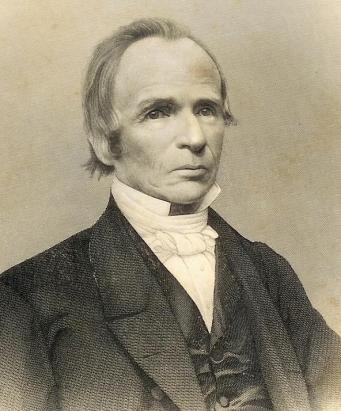
Alvan Bond was born in Sutton, MA, in April 1793. He graduated from Brown University in 1815 and studied theology at Andover Theological Seminary. Following graduation, he was ordained in the Congregational Church in Sturbridge, Massachusetts. Following ten years as pastor, Alvan became Professor of Sacred Literature at the seminary in Bangor, Maine. Finding the climate too severe for his health, Alvan came to Norwich in 1835 and was installed as pastor of the Second Congregational Church, which had a membership of approximately 360. Under Rev. Bond’s leadership, the church remained full. After seven years, 98 of the most active members chose to split off and form the Broadway Congregational Church, leaving 40 vacant pews to fill. Rev. Bond worked tirelessly throughout the year to attract new members. His congregation caught his enthusiasm, and when the sale of pews came around the following year, all seats were taken. Rev. Alvan Bond supplied the pulpit for twenty-eight years, missing but one communion service.
At the outbreak of the Civil War and throughout that terrible struggle, Rev. Bond’s church, stimulated by his leadership and his example, was in the very forefront of the conflict. Responding to a call to aid Norwich soldiers, no less than twelve of his people give freely from two hundred to a thousand dollars apiece.
At the first great “war-meeting” in Breed Hall, on Saturday evening before the memorable “Battle Sunday,” Bond’s voice was heard invoking the name of Jehovah, and inspiring the people to trust in an Almighty Helper. The following Sunday, while the women of the city made garments for the volunteers scheduled to depart the next day, he preached to the men of his congregation upon “The overwhelming catastrophe and the need of girding the loins for the most intense endeavor.” His sermon was boldly prophetic. Upon invitation, received during the intermission, it was repeated that afternoon at the Broadway Church, in exchange with its pastor.
In December 1864, at his request, Alvan Bond was dismissed from the pastorate he had so long and so faithfully held. For nearly ten years afterwards, he continued to preach in various pulpits, and at intervals in that of the Second church. The last time his voice was heard in public, he bore part with the present pastor at a communion service for that church, and uttered words of fervent appeal which will long linger in the memory of those who were fortunate enough to hear them.
References