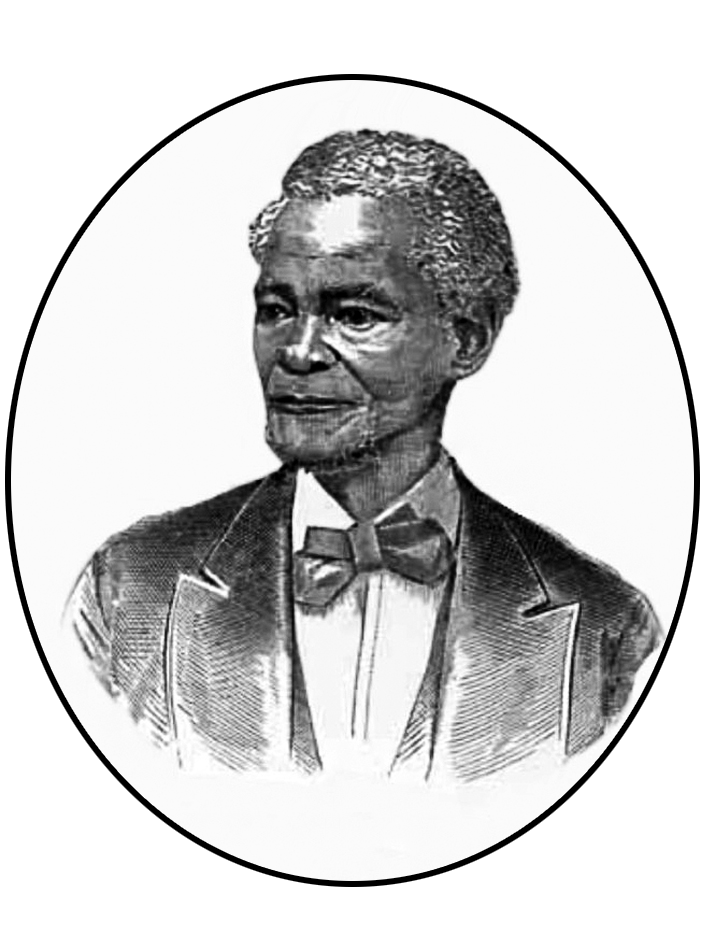
James L. Smith, born into slavery in Northern Neck, VA, wrote a vivid and poignant autobiography in 1881. In it, Smith detailed life on the plantation, a debilitating injury he received as a child, the brutality of slavery, and the heartbreak suffered by separated black families. “We were treated like cattle, subject to the slave-holders’ brutal treatment and law.” He recounts how he was sold to a ship’s captain as a cook, a man who beat him so cruelly that “if I ever got away, I would throw myself overboard and put an end to my life.”
James was trained as a shoemaker at the age of 18, a trade in which he excelled and worked for several owners. Eventually, he saved some money from bits he kept back from the sale of shoes in a less supervised shop. He ran away, pursued by his owner as far as Philadelphia. With the help of David Ruggles, a free black and ardent abolitionist active in the Underground Railroad, James Smith made his way to Springfield, MA. Smith attended a school in Wilbraham for several years, working as a shoemaker to earn room and board; simultaneously, he earned a license to preach. He traveled with Dr. Hudson throughout Connecticut and parts of Massachusetts, including Boston, where he spoke at anti-slavery lectures. It was at one such program that he met Emeline Minerva, and they married in 1841.
James Smith relocated his wife to Norwich, where he established a shoemaking business. They lived in a tenement on Franklin Street. In two and a half years, he saved enough money to make a 50% down payment on a house; the mortgage was retired in three years. He and his wife had three daughters and a son. The son carried on the shoemaking trade; two of the daughters graduated from Norwich Free Academy, and the eldest from the “Normal Grammar School.”
His autobiography includes his recollections of the Civil War, the Emancipation Proclamation, his concerns about the Fugitive Slave Law, and insights into race, religion, and politics. He concludes, “With these thoughts I leave, asking you to give your hearts to wisdom, restraining yourself from selfishness and living for the good of others.”
References
Lucretia Bradley was born in Hopkinton, RI, on May 7, 1821. At the time of her birth, she had 3 older sisters aged 8, 13, and 15. At the age of four, Lucretia’s mother died, and one of her sisters, Abby Ann, died five years later. Abby is buried in Hopkinton, RI, so it is most likely that Lucretia lived there in 1830.
Twenty-four years later, at the age of 34, Lucretia was unmarried and was very adventurous. She traveled from Connecticut to Easton, PA, and visited Mr. John Wise, a famed aeronaut, manufacturer of gas-filled balloons, and pioneer in ballooning. During the visit, she purchased a “considerably worn” balloon from Wise for $100. At the time of purchase, he advised her that the balloon needed to be well oiled before being used. In his book, Through the Air, he wrote, “Miss Bradley was a woman of more than ordinary qualifications, active and elastic as a deer, and possessed of a spirit of determination that knew no discouragement in anything she undertook. ‘The Eastonian’ said of her most truthfully that she was ‘a brave, enthusiastic and accomplished Yankee girl, and didn’t want to be anything else.’ ”
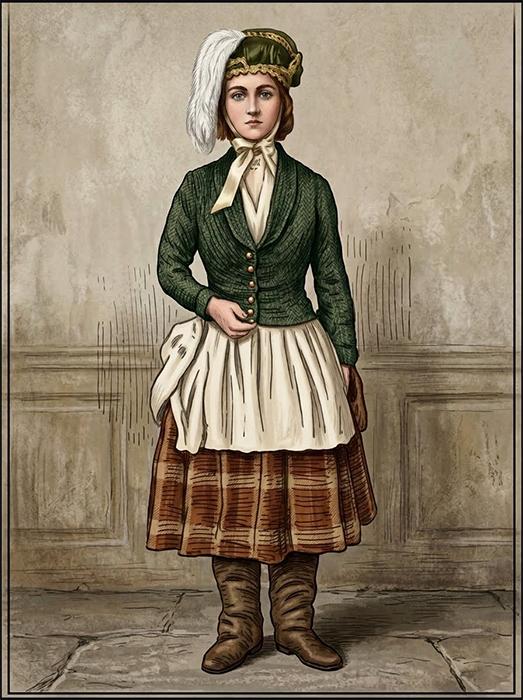
She is shown here wearing the costume of her 1855 ascension. The image is a “colorized” version of an original drawing published in several newspapers in 1855. This is the only known image of Lucretia Hubbell.
In 1858, she and Algernon Hubbell were married at the residence of Lucretia’s close friend, famed Civil War Dr. Mary Walker, in Rome, New York. They were married in an unconventional manner. They had a Friends’ marriage ceremony, in which they married themselves. At the time of their marriage, Algernon was 21 and Lucretia 37.
After 18 years of marriage, Lucretia, at age 56, and Algernon, at age 40, adopted a 17-year-old girl in 1877. Ida Snow was an orphan (her mother died when Ida was 6 years old). Ida had been boarding at the Hubbell residence on Franklin Street for many years. Ida never married and continued living with Algernon after Lucretia’s death in 1907.
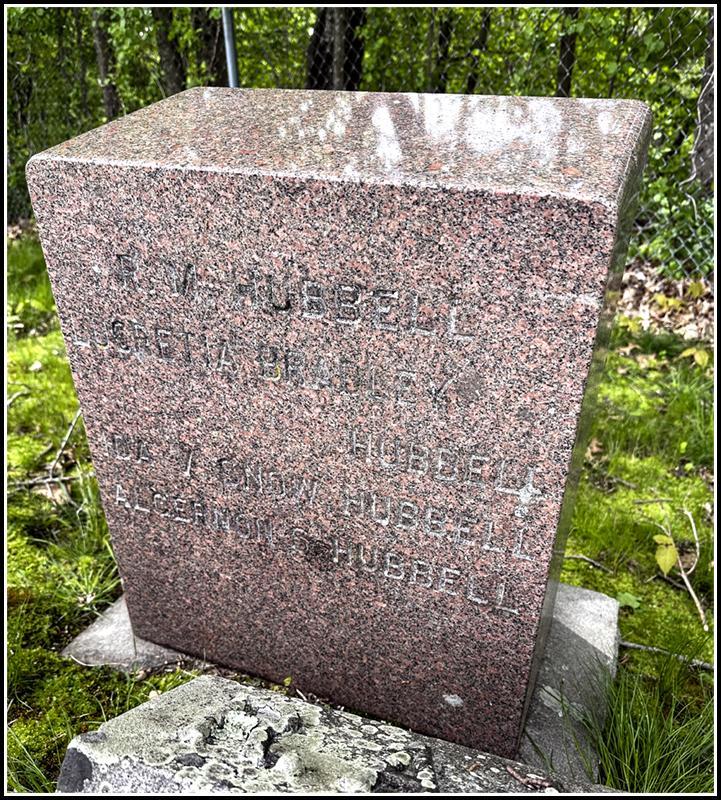
The entire arm of Norwich’s Hubbell family, Richard, Algernon, Lucretia, and Ida are buried together in the Yantic Cemetery. Their gravestone is shown on the left.
References