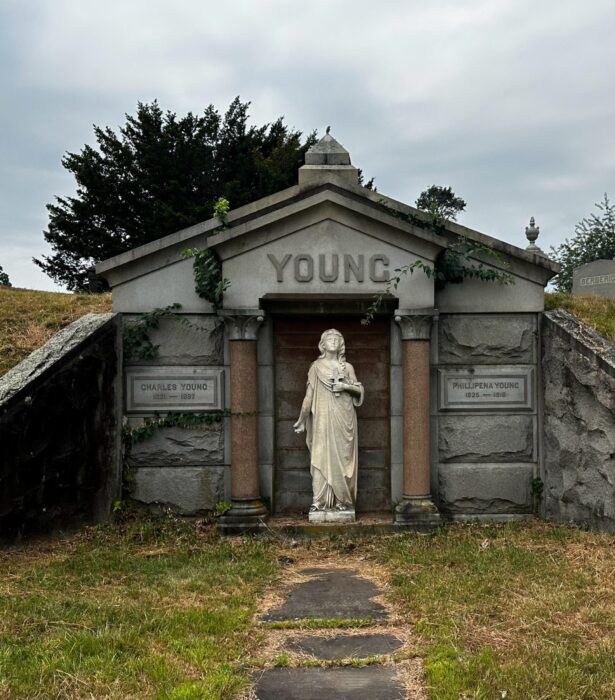
Charles Young was born in Bavaria, Germany, in September 1821. He assisted his father with the work on their farm and attended school until the age of fourteen. From his elder brother, he learned the cutlery trade and followed this profession until the age of twenty-two, when he entered the German army, in which he served for the next six years. When war broke out between Bavaria and Prussia, Bavaria was defeated, and Charles Young, a Bavarian officer, was forced to flee his native country to avoid capture.
He came to America in 1849, bringing with him his bride of only four weeks, Phillipena Young. They sailed from France to New York, a voyage which took thirty-one days.
Two days after landing in New York, the young couple came to Norwich, CT, where Charles learned the trade of molder at Vaughn’s foundry, while his enterprising wife, Phillipina, obtained work as a seamstress. Her skills were immediately recognized. As a popular dressmaker, she often worked from early morning until late at night, contributing to the family’s savings that would eventually lead to financial success.
* Place cursor over the image to magnify
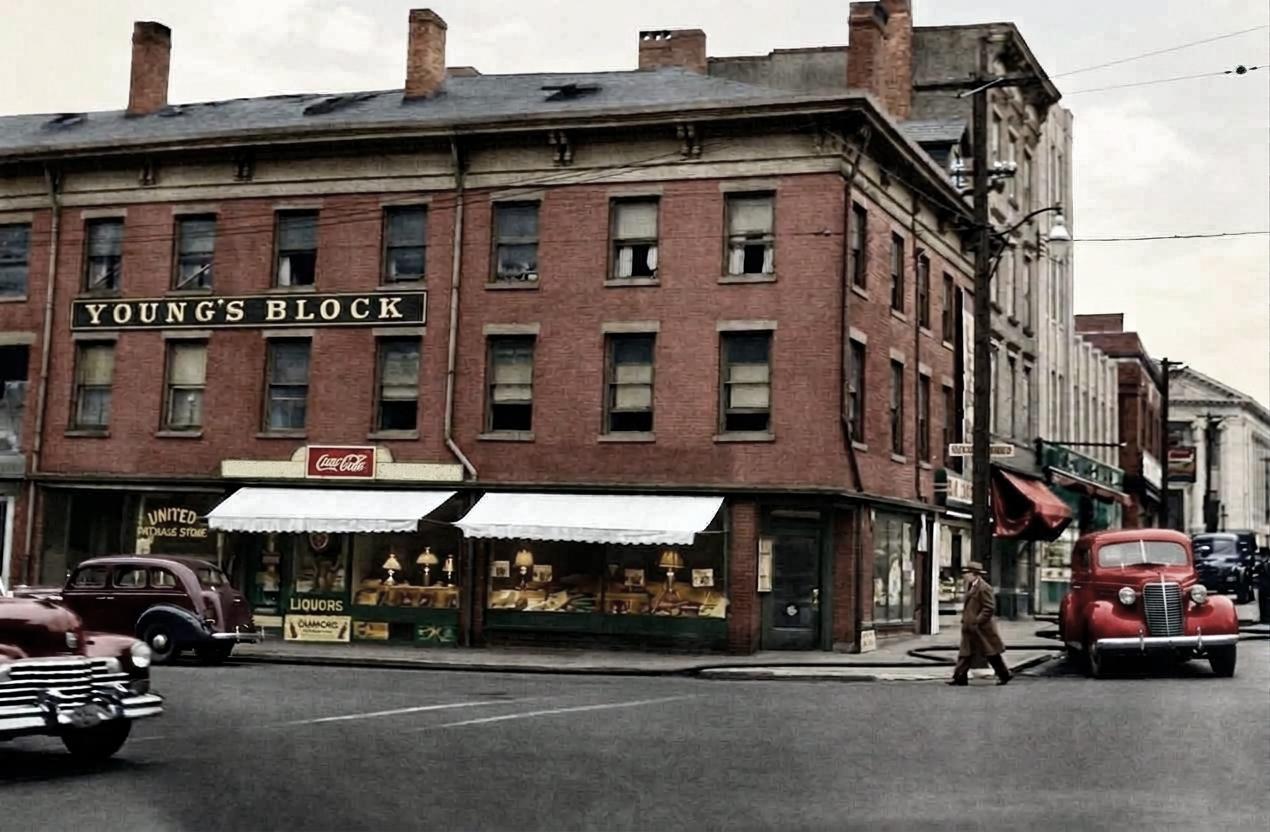
In April 1864, during the Civil War, the Youngs purchased the corner building at Main and Franklin Streets in downtown Norwich. Over time, they acquired the surrounding buildings, and the block became a landmark known as Young’s Block.
The original building was removed in 1949, and a new building was erected in its place; however, the Young’s Block designation continued. The new building was leased for 99 years to the Annular Investors’ Corporation of Danbury, CT. In time, the building was subleased to F. W. Woolworth Company, which guaranteed the income.
In the summer of 1871, Charles Young and Phillipina purchased the residence at 34 East Town Street. The property, which comprised 7 acres, belonged to the estate of William W. Cutter, M.D., and is more widely known today as the Samuel Huntington Homestead. Mr. Young built greenhouses and made other improvements, operating the property as a fruit and flower farm. There, Mr. Young made a home until about a year before his death, when he was taken ill and removed to a hospital in Hartford.
Mrs. Young was a talented businesswoman who significantly increased the family fortune during her seventeen years of widowhood. She remained alert, without the need of spectacles, and traveled often to New York to conduct real estate business until her death in September 1916 at ninety-one. The beautiful vault she erected for her husband’s remains she now shares with him.
Charles and Phillipina had one daughter who died after only two days. Both were Lutherans.
Charles Young died in his residence on May 27, 1897, and his wife, Phillipina Young, died there on September 13, 1916, at the age of ninety-one.
Reference
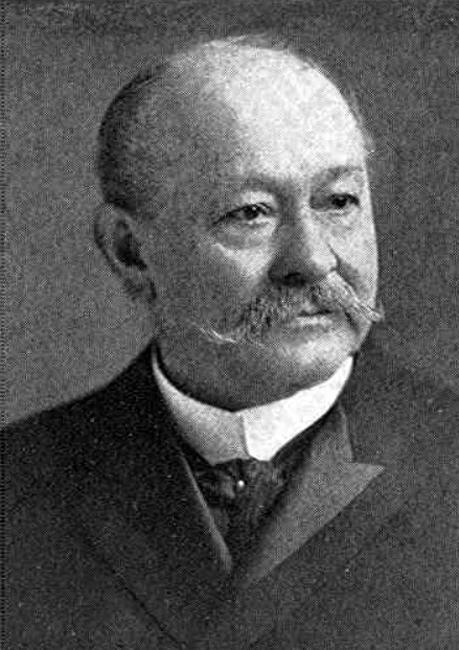
The Welte family story begins in Germany, where Emil Welte was born in 1841. Following graduation from a technical college, he became involved in the family business of manufacturing clocks and automated musical instruments. At the age of twenty-one, he was appointed by the Grand Duke to represent the clock and automatic musical instrument industries from the Black Forest region at the London exhibition in 1862. Four years later, in 1866, Emil sailed to New York City, by way of Boston, for the express purpose of delivering and installing a large (and expensive) orchestrion.
His automatic, self-playing organ attracted much favorable attention, and, recognizing a business opportunity, Emil wrote to his father, Michael Welte (b. 1807 – d. 1880), to ship him several smaller orchestrions. He opened a store on the corner of 5th and 22nd Street in New York under the business name of M. Welte & Son, a Branch of M. Welte & Soehne in Voernbach, Germany.
Business prospered, and Emil soon opened a second store on East 14th Street, a popular shopping district in NYC at the time.
In 1867 Emil traveled to Norwich for business. He remained acting head of the company until 1914, when he retired to Norwich, CT, to live at 34 E. Town Street.
Emil Welte married, June 1871, in the Second Congregational Church of Norwich, Emma Marguerite Foerstner, born in Norwich, March 1853, daughter of Joseph and Mary Foerstner, and niece of Mrs. Phillipena T. Young
References
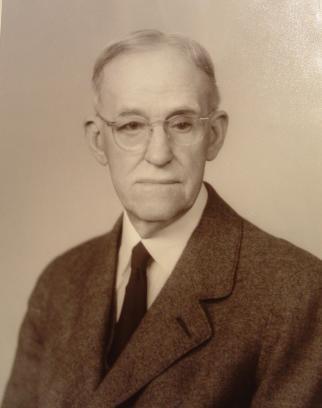
Carl Welte was born in Norwich, August 1872, in the Samuel Huntington mansion at 34 East Town Street, then the home of his great aunt, Phillipena Young. The same year, his parents relocated from New York City. He attended public school in New York City. He graduated from college with advanced degrees in mechanical drawing and music, with a focus on piano, in preparation for entering his father’s business (M. Welte & Sons), which he joined in 1889, beginning an apprenticeship in organ building. In 1893, he was sent to Chicago for the World’s Columbian Exposition to oversee the firm’s exhibition. In 1901, he became a member of both firms, in New York and Germany.
On May 1, 1914, Carl, retaining stock ownership, withdrew from active participation in the business and retired, living in the Samuel Huntington mansion in Norwich. Here, he continued to manage his mother’s estate and father’s business. Carl was a member of the New London County Historical Society, the Norwichtown Rural Association, director in the Tin Mining Company of Alaska, and a life member of the Luther Burbank Society of Santa Rosa, California. Carl died in 1955.
Carl married Annie Easter Morgan of Norwichtown in 1903 in New York City and was the parent of one son, Carl M. Welte, Jr., who was born in 1907 but died in July 1908.
Reference