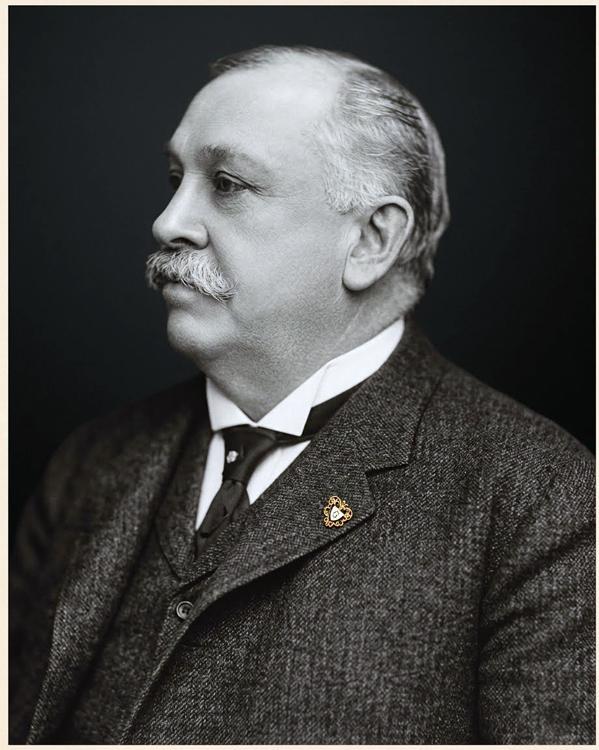
Costello Lippitt was born on December 12, 1842, in East Killingly, CT. He was the only child of Reverend Norris and Eliza Leffingwell Lippitt. His early education included local schools in East Killingly and later Norwich Free Academy. Lippitt attended Wesleyan University in Middletown, CT, graduating in 1867 with a master’s degree.
Costello settled in Norwich and began his career following in his father’s footsteps in finance as an assistant teller for the Norwich Savings Society. For fifteen years preceding July 1901, Mr. Lippitt served as a member of the board of trustees of the Connecticut Hospital for the Insane at Middletown. He was a member of the board of directors and trustees of the Norwich Savings Society and was a senior member of the board of directors of the Merchants National Bank. He also served as a trustee of the Norwich Free Academy and was secretary and treasurer of the Eliza Huntington Memorial Home at Norwich, succeeding his father on the board. In 1903, he was elected the first president of the board of trustees of the new Norwich Hospital for the Insane, and he was a director of the Norwich Street Railway Company.
Costello Lippitt was a Republican and served as Norwich’s mayor from 1908 to 1910.
Mr. Lippitt was one of the best-known members of the Masonic fraternity in the State. He was made a Master Mason in Somerset Lodge No 34 Free & Accepted Masons, and when St. James Lodge No 23 was formed in 1873, he was a charter member of that lodge. He was also a member of Franklin Chapter No 4 RAM, Franklin Council No 3 R & SM, and was Past Eminent Commander of Columbian Commandery No 4 Knights Templar. For thirty consecutive years, he held office in the Commandery and served as the Prelate. He was Past Grand Commander of the State, Treasurer of the Grand Commandery of the State, and President of the Past Grand Commanders Association, Knights Templar of Connecticut.
In Scottish Rite Masonry, he was equally proficient. He was a member of King Solomon Grand 6 Lodge of Perfection, the Van Rensselaer Council of Princes of Jerusalem, Norwich Sovereign Chapter of Rose Croix, Connecticut Sovereign Consistory of Norwich, and served three years as Commander in Chief of the last body. He also belonged to the Sphinx Temple Mystic Shrine at Hartford.
On Sept 20, 1898, at Cincinnati, he was made a member of the Supreme Council of the Sovereign Grand Inspectors General of the Thirty-third and Last Degree for the Northern Masonic Jurisdiction. He later became a member of the board of directors of Norwich’s Masonic Temple Corporation and served as its treasurer.
At the age of fourteen, Costello Lippitt united with the East Main Street Methodist Episcopal Church, later transferred his membership to the Central Methodist Episcopal Church, and then to the Sachem Street Methodist Episcopal Church. In 1895, when the Trinity Methodist Episcopal Church was organized, he was one of the leading spirits and became president of the board of trustees, holding that office to the present time. He served as superintendent of the Sunday School for twenty years and as organist of the churches for over forty years. He was also a member of the American Missionary Board of the Methodist Church, had a wide acquaintance in Methodist circles, and also belonged to one of the societies connected with Wesleyan University.
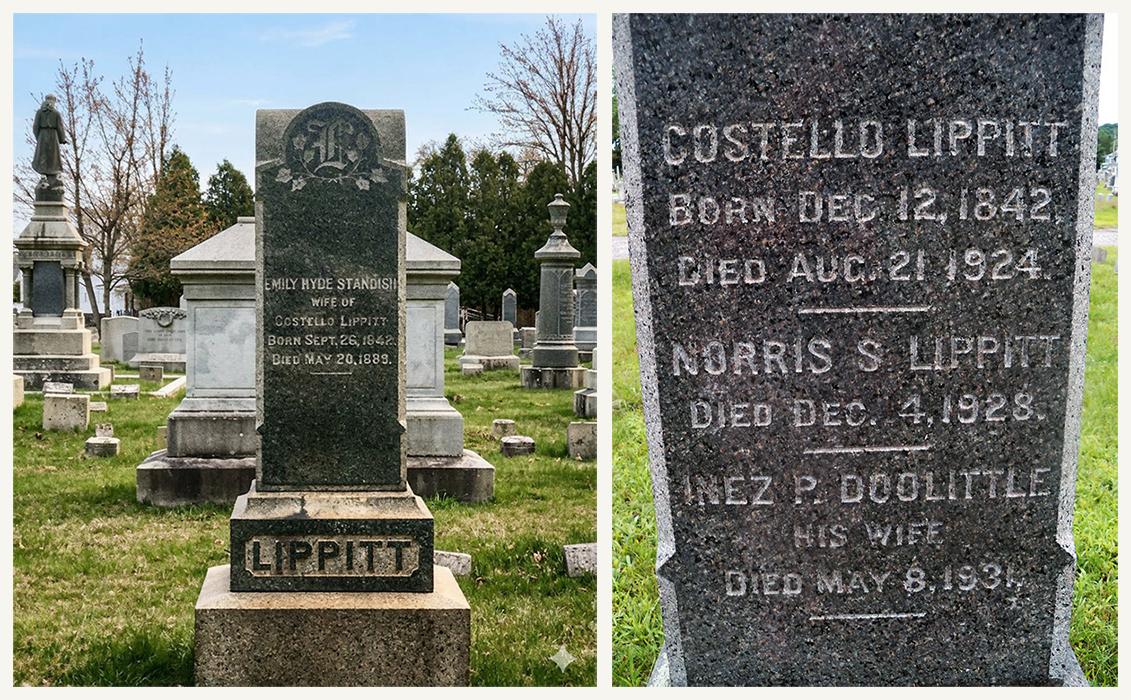
On Aug 16, 1864, Mr. Lippitt was united in marriage to Emily Hyde Standish, adopted daughter of Nathan Standish. Mrs. Lippitt died May 20, 1889, aged forty six years. She bore her husband two children: (1) Mary B., born July 28, 1865, is the wife of C. J. Wolcott of Norwich and has two children, Marion Belle and Marguerite Standish; (2) Norris S., born Dec 25, 1867, was an assistant teller in the Norwich Savings Society and is a 32d degree Mason; he married Inez Pauline Doolittle. They had one child, Mary Esther.
On May 31, 1891, Costello Lippitt married for his second wife Gertrude H. Lamphere, a direct descendant of Stephen Hopkins, one of the signers of the Declaration of Independence. Mrs. Lippitt was a member of the Faith Trumbull Chapter DAR
Costello Lippitt was well known and is remembered as a very kind and obliging man. He had the full confidence of a large circle of friends in both the business and social worlds.
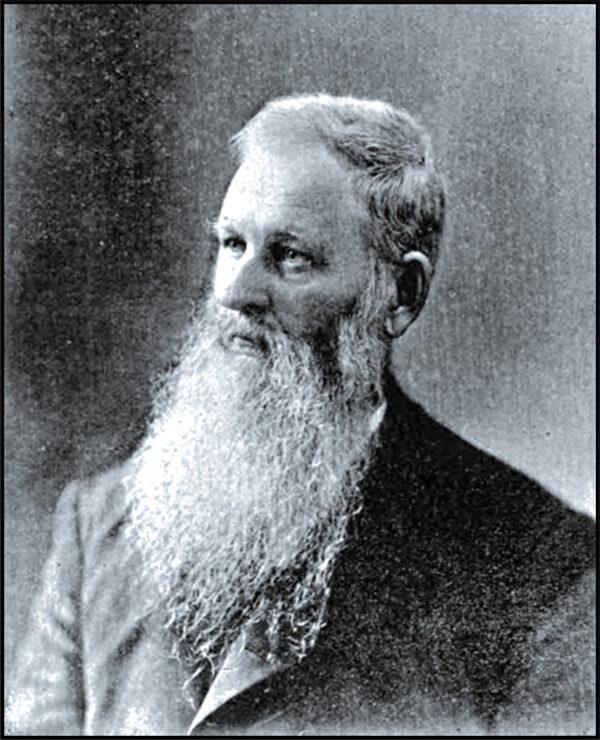
William Hamilton Page was born in Tilton, New Hampshire, on March 14, 1829, to James & Jane Greenleaf Page. Page spent his childhood on a farm in the Connecticut River Valley and later became the most important American wood type manufacturer of the 19th century.
Page started as a printer’s apprentice at age 14 in Bradford, Vermont. From 1843–1849, he moved from printer to printer in towns and cities across the region, including Haverhill and Concord, New Hampshire; and Boston, Massachusetts. Sometime in 1849, Page moved to Worcester, Massachusetts, where he worked as the foreman for two years, printing The Daily Spy, and then spent a year as a writer for the newspaper.
In 1852, he moved to New York City to work at the New York Tribune under the renowned editor Horace Greeley during the Franklin Pierce presidential campaign. The following year, Page moved to Norwich to work at the Norwich Tribune. Over the next two years while working for the paper, Page took up wood engraving, and in February 1855, he moved to South Windham, Connecticut, to work as a type trimmer and cutter, manufacturing wood type for John Gaines Cooley.
In September 1856, Page left the employ of J. G. Cooley and partnered with James Bassett to purchase the defunct wood type manufactory belonging to Horatio and Jeremiah Bill of Willimantic, Connecticut. The business, known simply as H & J Bill, had failed in the fall of 1854 and was shuttered by that winter.
In October 1857, Page moved back to Norwich when Page & Bassett relocated their wood type manufacturing concern 13 miles southeast of South Windham to Greeneville. In Greeneville, Page & Bassett enlarged their production capacity in the warehouse owned by Samuel Mowry of the Mowry Axle & Machine Company. In 1859, their business name, Page & Bassett, was changed to William H. Page & Co. when Samuel Mowry bought out James Bassett’s shares. An 1862 tax assessment listed the value of William H. Page & Co. at $451.37 ($15,000 in 2026 $). The assessed value doubled by 1864, and by 1866 the company’s assessed value was reported as $4,161.00 ($137,500 in 2026 dollars).
Page was an active and engaged inventor, granted patents on numerous inventions and product improvements across a range of industries over the course of his life. His first known patent was for an ornamented border. US Design Patent 2,932 was awarded in February 1867. He was a forward-thinking businessman for his time. Rob Roy Kelly wrote, “…during the Civil War, Page had hired women because of the manpower shortage, and finding them so adept at many of the operations in the manufacture of wood type, he continued to hire women regularly until the business sold in 1891.”
In 1869, Page acquired the wood type manufacturing portion of his former employer’s business. Cooley & Dauchy, as it was by then known, was located in New York City. Samuel Dauchy retained the other portions of the business and continued in New York under the name Dauchy & Co Printers’ Warehouse & Advertising Agency. The new company acted as agent for William H. Page & Co.’s wood type sales in the New York region.
In 1871, Page started a non-wood type-related business, Page’s City Gardens. William Hovey, his wife Catherine’s younger brother, was listed as agent for the concern. The gardens produced fruits & vegetables, maintained hothouses for fresh flowers, and included a modern dairy farm. Records indicate that the gardens flourished well into the 1880s. In the 1873 Norwich City Directory, William Page was also listed as the vice-president of the Norwich Horticulture Society.
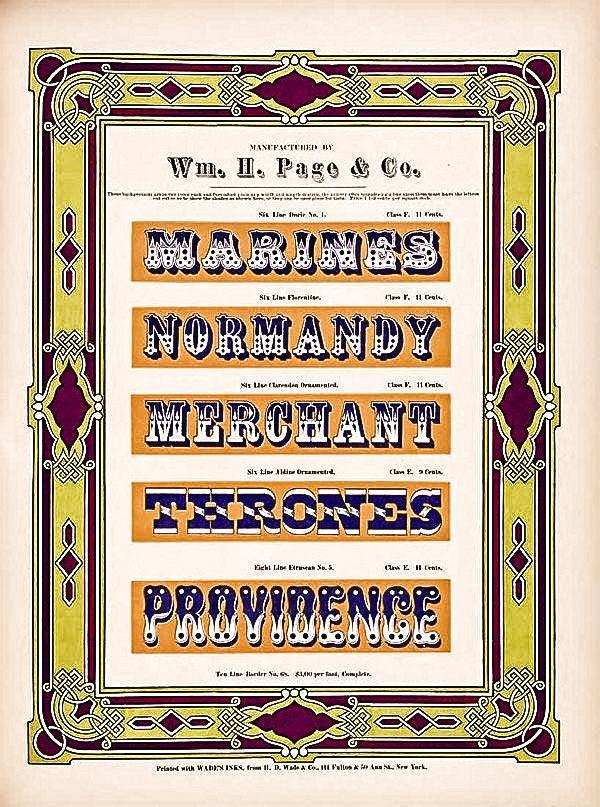
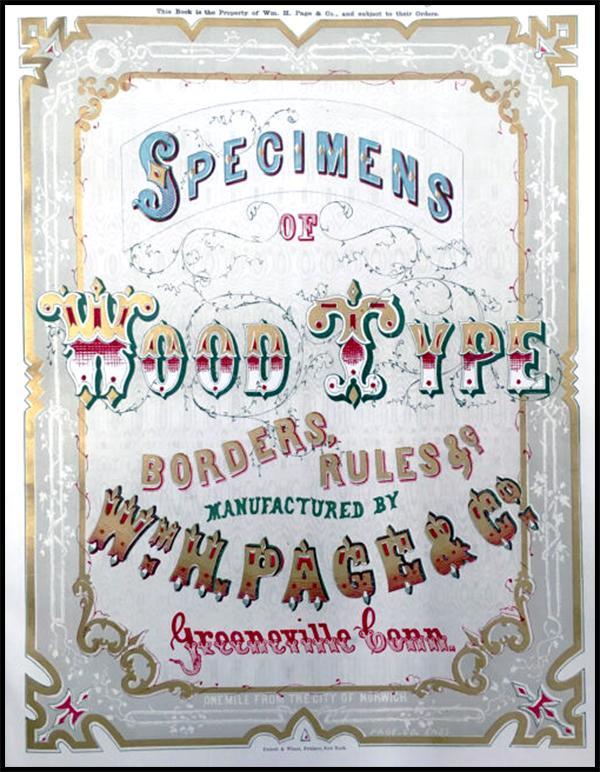
Among the numerous wood type and ornamental borders he designed and patented, Page was also successful in developing and producing a range of chromatic wood types. Chromatic types were designed to print a letterform in two or more colors simultaneously. These types, produced in register as corresponding pairs, were designed so that when printed, one color would overlap another in certain places to create a third color. Chromatic types were shown regularly in foundry type specimen books of the 1840s and 1850s and were first produced as wood type in George Nesbitt’s 1841 Fourth Specimen of Machinery Cut Wood Type. Chromatic wood type would reach its expressive high point with William H. Page & Co.’s 1874 masterpiece Specimens of chromatic wood type, borders, &c. manufactured by Wm. H. Page & Co. Greeneville, Conn. — arguably the most beautiful wood type specimen catalog ever produced.
In 1876, Samuel Mowry retired, and the company’s name was changed to William H. Page Wood Type Co. Page was listed as Treasurer, George Setchell as President, and John Mowry (Samuel’s eldest son) as Secretary. In 1877, Page’s eldest son William Edward Page began working in the type shop of the William H Page Wood Type Co. Three years later, Lewis Hovey Page, his second eldest son, also began working for the company.
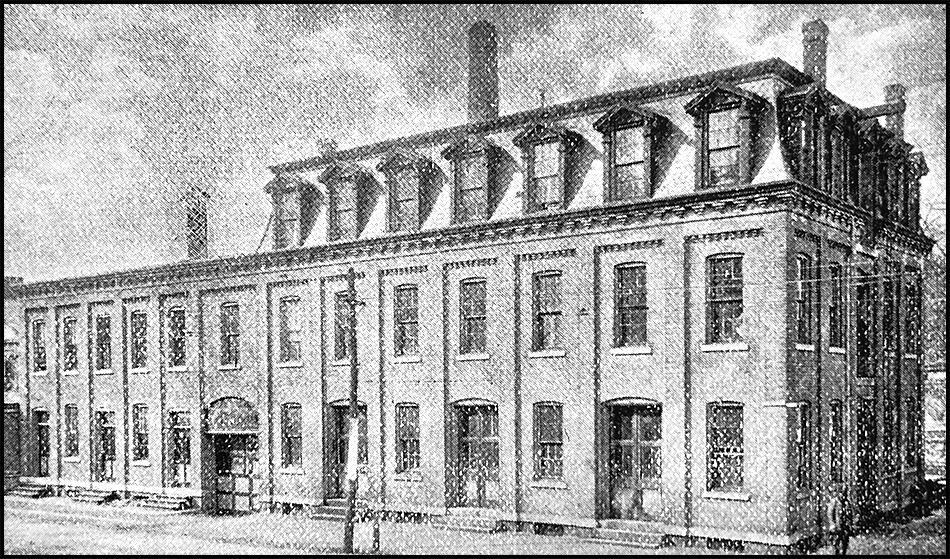
Beyond wood type, printing equipment, gardening, and dairy farming, Page also became interested in the building of boilers and steam heaters. In 1876, Page incorporated a new business, the William H Page Boiler Co., and named Samuel Dauchy of New York president. After Page patented a steam heater in 1879, he founded another company: The Page Steam Heater Co.
Click Here to learn more about William H. Page and his many inventions.
William Page was listed as President, and William Mowry (Samuel’s younger son) was listed as Secretary and Treasurer. The patenting of a steam radiator in 1882 prompted Page to establish the Combination Company, a steam-heating supply business.
In May 1883, Page also incorporated the Victor Heating Co. with $24,000 ($800,000 in 2026$) in capital stock. Page was listed as the president of the company, and the address, 112 Franklin Street, matched the address listed for the Wm. H. Page Wood Type Co.
In January, 1887, William Page wrote a letter to William Baker of Hamilton & Baker in Two Rivers, Wisconsin. The letter broaches the subject of Wisconsin Concern acquiring all of Page’s wood-type manufacturing capabilities. Page writes that he is interested in exiting the wood-type business to more fully engage in the lucrative boiler and steam-heat businesses he has created. While it is not clear who initiated the buyout talks, the letter made it clear that the William H. Page Wood Type Co. pursued the merger. The letter also included interesting details of Page’s acquisition of J. G. Cooley’s wood type company in 1869.
The letter must have been met well because, by 1891, William Page completed the transfer of his wood type business in its entirety to J. E. Hamilton. By all accounts, Page was very successful at the boiler and steam heater business. He continued to be awarded patents for his technical ingenuity over the next fifteen years.
In 1901, the Page Co. was incorporated with William Page as president. It is not entirely clear if this company produced any new products or was set up to oversee the licensing of Page’s patent portfolio to manufacturers on the East and West Coast. Although it is unclear what involvement he had with the company after the early 1900s, the William H. Page Boiler Co. remained a successful manufacturer of heaters and boilers into 1932.
Rob Roy Kelly indicated that Page established the New England Boiler Company in Mystic, Connecticut in 1905, and moved the company to New London in early 1906. Kelly also wrote that “at the time of his death [in May 1906] he was scouting a new location for his boiler company in Norwich.”
William Page sold his wood-type business in 1891 but continued in the heater-production business for the rest of his life. The William H. Page Boiler Company continued to do business until 1932 (26 years after his death).
On November 20, 1855, William H. Page and Catherine Elizabeth Hovey Page were married. The couple had eight children during their fifty years of marriage. They lived in a modest home at 20 Grove Street in Norwich, near his wood type company.
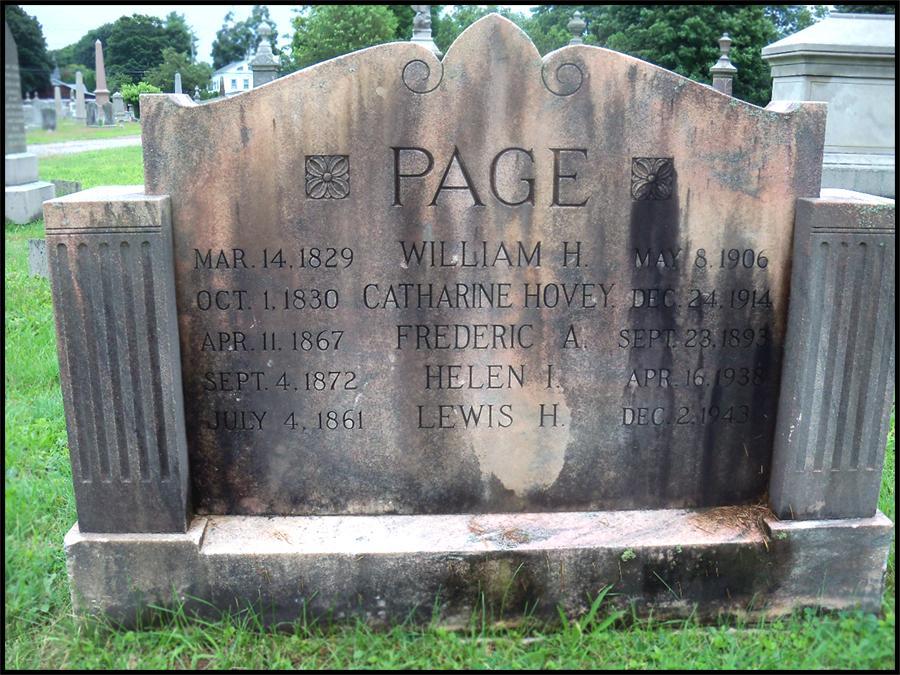
William and Catherine are buried in Yantic Cemetery along with three of their children Frederic, Helen, and Lewis.
There was a glowing obituary for Page published in the July 1906 issue of the Inland Printer.
“His habits were perfect, and he possessed a most amiable disposition that made friends of all whom he met. He has employed hundreds of people and has always had a fatherly interest in his help. He was generous and extremely charitable. As a general thing, others than the deceased profited by his skill and talent. Still, he did not complain and persevered to the end. His home life was happy. Mr Page’s many friends were surprised and grieved to hear of his sudden death, and know that the world is better on account of the example of his life.”
Rob Roy Kelly wrote of Page, “a remarkable individual, he was capable, charming, and generous to a degree not always found in the commercial world of the period. His continued aim for perfection in all matters that captured his interest should be admired.”
Paragraph 3a
Paragraph 4a