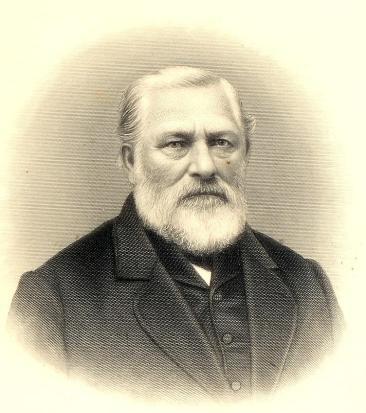
Chauncey Bushnell was born in Lisbon, CT, in February 1805. He worked on his father’s farm and attended a small district school four months out of the year. Later, he taught at this school, while still farming, had twenty-one students, and received a monthly pay of six dollars. In March 1828, Chauncey was teaching in a school on Long Island, near Brooklyn. He took sick and returned to teach again in Lisbon. The following year, he entered the Oneida Institute in upstate New York. Following graduation, Chauncey settled in Norwich, where he continued his teaching career. In April 1832, he married Mary Eliza Fuller, and their daughter, Mary Witter, was born in July 1833. Chauncey’s wife passed away in December 1833, leaving him to raise Mary.
He continued to teach in area public and private schools until June 1836, when he joined the Anti-Slavery Society in Cincinnati, Ohio, as the publishing agent for their newspaper, the Philanthropist. He helped rebuild the presses following the proslavery riots. Chauncey traveled to Alton, IL and taught for a short time, but soon returned to Norwich. In March 1840, he married Mary Abby Post, and the couple settled in Norwichtown. In April 1841, Chauncey was teaching at a high school in Norwichtown.
Having lost two little sons in infancy, on the 10th of March, 1846, the couple adopted George Lovice Gardner (Bushnell), born on the 14th of July, 1843, the youngest son of his wife’s sister, who died on the 14th of February.
George L. G. graduated from the Norwich Free Academy on the 19th of July, 1862, taking the Perkins’ Greek medal and two diplomas. After serving as bookkeeper and cashier for four years at Richardson, Boynton & Co. in New York, and as clerk of the South Congregational Church in Brooklyn, he returned home and died of consumption on November 15, 1868.
In 1848, Chauncey practiced surveying and civil engineering, creating deeds, wills, and various legal documents, while also teaching. Following thirty years in the classroom, he retired in 1858.
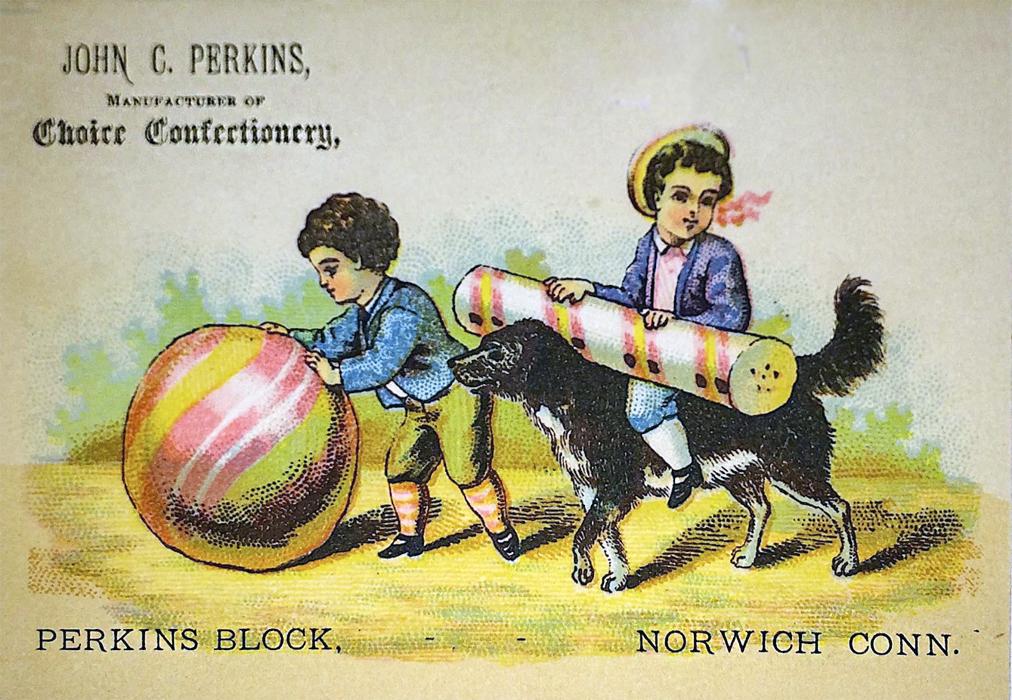
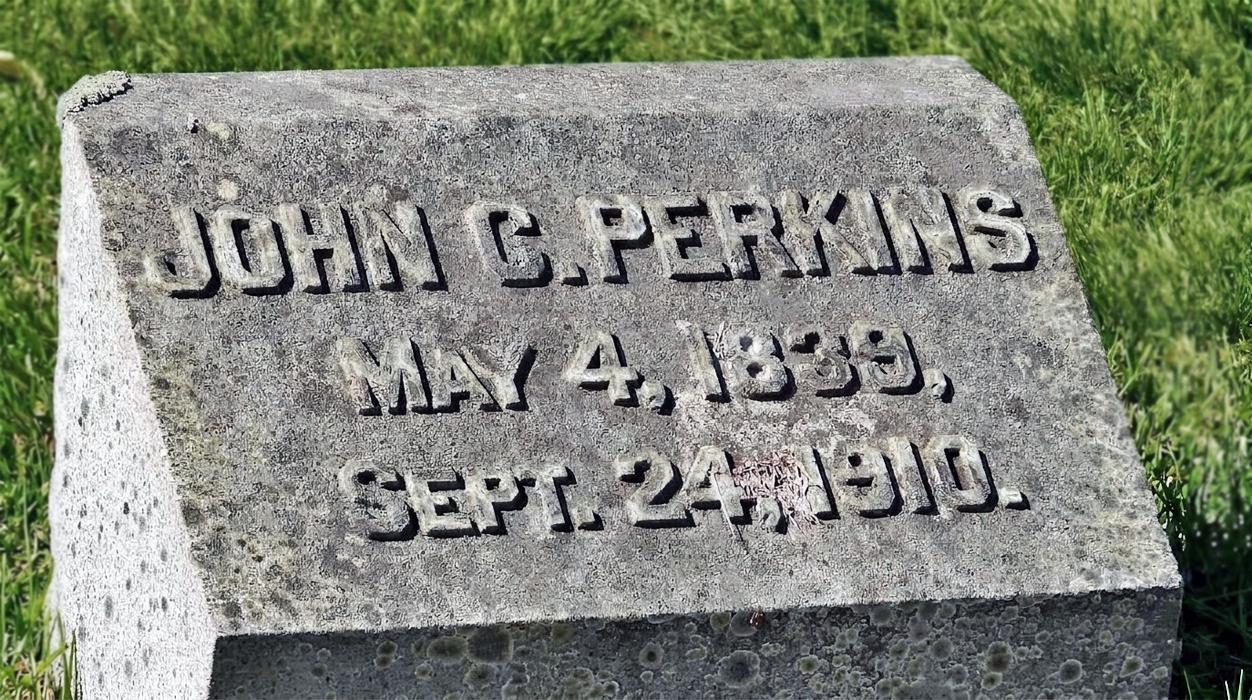
John C. Perkins led the confectionery industry in eastern Connecticut. He produced a line of goods known for purity and excellence. His sales rooms were in Perkins Block, a substantial and creditable structure he built in 1879. Later, the establishment moved its manufacturing department to Commerce Street, where a large part of the goods for the trade and the retail store were made, and ten hands were employed. The attractive store presented an endless and tempting assortment of choice confections, and the establishment, thanks to its high reputation, became one of the busiest and best patronized on Main Street.
The goods were known to be strictly pure; and a box labeled “Perkins’s Confections” was a gift highly appreciated by the fair sex. The superior quality and great variety of goods manufactured gave this wholesale confectioner a reputation that extended to many of the western states. He carried an extensive trade throughout eastern Connecticut, and the celebrated English Wafer Lozenges, which Mr. Perkins originated and introduced to the market, made him famous in the candy trade.
Mr. Perkins manufactured these fine delicacies for more than 30 years. The quality of his candy improved rather than declined. New flavors and varieties were frequently introduced, all of which were key to Mr. Perkins’s pronounced success.
Mr. Perkins was married to Margaret A. Robertson. They had one child, Johnnie, who died at age four.